Koenig & Bauer Durst launches new industrial production press

Koenig & Bauer Durst has used its latest SPC Open House to announce a new addition to its product portfolio with the unveiling of the Delta SPC 130 FlexLine Eco+ industrial production press for run lengths from one to millions of square metres.

The entry-level, compact model will offer corrugated converters a new route into digital packaging or will enhance their current capabilities. 

The Delta SPC 130 FlexLine Eco+ press, using water-based, food-safe, sustainable inks, will offer a price performance ratio for converters with media sizes up to 1.3m by 2.8m.

This new press will be fully upgradeable to the Delta SPC FlexLine Automatic press.

Based on the Delta SPC 130 FlexLine Automatic press, the new machine will be addressing converters with volumes of between four million and eight million square metres  a year. It also includes a compact drying system.

Koenig & Bauer Durst also announced the introduction of Dynamic Nozzle Management (DNM). This tool is said to significantly reduce the printhead maintenance across its Delta SPC 130 product portfolio, which will be another boost for customers’ productivity.  

DNM will become part of the standard package for the Delta SPC 130 portfolio, including the new Eco+ model, and will further reduce the maintenance cycles of the Koenig & Bauer Durst’s printheads.

The tool identifies nozzle clogging and can then be programmed to manage the level of ink being jetted from the head. It ensures that high-quality production is always maintained.

Koenig & Bauer Durst Delta SPC 130 product manager Matthias Krautgasser said, “We have already implemented our automated non-contact cleaning system – DNM will further increase uptime and productivity of our Delta SPC 130 product lineup. 

“DNM is another tool in our parcel of advanced technologies which will give our customers even more confidence in these challenging times. The DNM will be fitted to all new products, including the Delta SPC 130 FlexLine Eco+ model that will be available from next year. It can also be upgraded to existing customer machines.

“Many of the corrugated converters we are in discussion with have run lengths of between 4-8 million sq/m per year, so the new Koenig & Bauer Durst Delta SPC 130 Eco+ will be perfect for them, with the capability to upgrade to the SPC 130 FlexLine Automatic press later.”

Koenig & Bauer Durst managing director Robert Stabler added, “Raw material shortages, cost pressures and mitigation strategies continue to be high on the agenda for customers. Coupled with brand owners demanding that new production methods are reliable, compliant and cost effective, we are confident that our complete product portfolio, including the new Eco+ press from Koenig & Bauer Durst, will meet the rapidly changing requirements.

“It was clear from discussions at our SPC Open House that converters increasingly need to have the capabilities and competencies to mass customise without any compromise on quality, and all at an effective total cost of ownership, which we provide.”

Read More

Durst Group – A top-rated company

Durst Group has been awarded the Cribis Prime Company DUNS No. 429002827, the highest economic-business reliability recognition, by the business rating company Cribis Dun & Bradstreet, this recognition is awarded to only 3% of the approximately 6 million Italian companies.

Cribis D&B is an organization that operates on a global scale in the field of Business Information and collects reports on more than 200 million companies in over 230 countries.The Cribis Prime Company certificate is based on the Cribis D&B Rating, a dynamic and constantly updated indicator of the reliability of the company being considered.

Read More

It’s a roller coaster.” – Interview with CEO and Co-Owner Christoph Gamper on how to run a business in Covid times.

How do you run a company when a quarter of the workforce is down, and components are missing at every corner? Durst CEO Christoph Gamper on everyday life at Corona.

Salto.bz: Mr. Gamper, you have just returned from a business trip to the United Arab Emirates. Does that mean it’s more or less business as usual for you at the moment?

Christoph Gamper: It is definitely not business as usual. Yes, I’ve just come back from Dubai and Abu Dhabi, and I actually wanted to go on to Australia. It’s been two years since I’ve been to our branch there, and I urgently had things to conclude there. But Australia had to be canceled at short notice because our Managing Director there had a vaccination breakthrough. My sales manager tested positive for Omnikron one day before departure. In the end, I was alone with customers in Abu Dhabi and Dubai. So, unfortunately, we are still a long way from normality. 

You have now spoken of two executives who are unable to work because of the virus. Do you also have an overview of how many of the total of just over 880 employees of the Durst Group worldwide are currently out of action? 

Currently, about 25% of the workforce is affected by the virus in some form. Not all of them are in bed but are also out of the office because children and relatives have been infected or because they have had contact with infected people. The regulations are currently being relaxed worldwide, but until recently we had many cases where our employees were not positive but could not come to work because of the strict regulations on positive contacts.

And how does one work under such conditions? Or, more concretely: What does the CEO of an internationally active manufacturer of high-tech large printing systems do to ensure that the business still runs? 

For me as CEO, it’s almost a schizophrenic situation at times. On the one hand, I have to generate sales and plan for the very long term to have the necessary materials to produce. And on the other hand, we are driving entirely on sight. We have planning reliability of a maximum of two weeks because politics apparently acts in two-week cycles, and the virus cannot be controlled anyway. So, it’s a roller coaster of emotions. Not just for the CEO but the entire team.

In some cases, we don’t even know how much capacity we have available in production on any given day. On the one hand, because of the employees, on the other because of the supply chain. After all, everyone is affected, not just suppliers in China. We also source many components from the surrounding area, from medium-sized companies in Germany, for example, and it’s the same for everyone. 

To stay with the staff for the moment: From a purely practical point of view, what happens then is that you first have to see who is in and who is not every morning?

Yes, there’s an update early in the morning about who’s here and who’s not, which has a corresponding effect on the planning, deliveries, and customers. And I get to feel the reactions to this around two days later because by then, at the latest, I have the first angry customers on the line asking me where their delivery is.

Heiner Oberrauch, President of the Employers’ Association of the Province of Bolzano recently warned that delivery bottlenecks would be unavoidable in some cases due to the tightened staff shortage. Can you confirm this fear? 

Well, in the business-to-business sector, at least in our area, this has already happened for a long time. In the consumer sector, developments are always a little delayed, but it’s an absolute reality for us. We build very large industrial printing systems that are used for digitization. On the one hand, these systems need inks and fluids and all kinds of other things to make them work and enable printing. In the area of these chemical components, we are often on allocation. That means we can no longer buy on the open market at all but have to go through brokers or, in any case, make an impossible effort to find these components on the world market.

On the other hand, we need electronic components, for which we know there are also supply bottlenecks. One of our strengths is that we invest over 20 million euros a year in research and development, but now, given the lack of availability, we have to redesign components, i.e., use other chips or build other boards. And of course, all of this always involves time delays and massive energy expenditure.

This means that your daily routine consists of constant improvisation, rescheduling, replacing employees with others… . Does it also sometimes happen that it is no longer possible to produce anything at all?

No, we can always produce something. But in many cases, either the employee or a component is missing to finish a product, and then everything sits on the stockpile. And everything that is not delivered ties up cash, which becomes a problem at some point. For some companies, to a much greater extent. Fortunately, we’ve done very well over the past ten years, and we still have a little more air and a little more nerve, but at some point, even we will run out of space.

Has this been going on for two years now, or has the situation with Omnikron become even more acute?

Since November, there has already been an escalation, which we have not experienced to the same extent before. But of course, it has been a roller coaster since March 2020. In the beginning, everything is shut down; then, you start to get your hopes up. We also took a lot of action; I think we were even the first in South Tyrol to produce masks; we developed the Habitat air disinfection system and launched new products on the market. All things that we have created out of our innovative strength. Also, to save our workforce from falling into resignation, into that hole. We succeeded in doing that, and to be honest, I thought the whole thing was over last summer. We had also had a huge summer party without any contagions. But then everything came back in full force.

And in the meantime, you also realize: the team, myself included, we’re just tired, we all can’t take it anymore. I had a vaccination breakthrough around the turn of the year, despite boosters. I am an incurable optimist. But when I sat in isolation in a hotel room in Florida on New Year’s Day, instead of celebrating at the wedding of one of my best friends, I thought: I’ve really had enough now.

And there’s still no glimmer of hope on the horizon?

I’m afraid the problems with our supply chains aren’t over yet. That’s going to go on, I guess, for at least another 12 to 18 months. Then, of course, we’ll have to see how things go with the infection issue and all the political solutions around it.

You already had a 12.5% drop in sales in 2020. Did the situation worsen again in 2021?

No, we are relatively quick to react, and fortunately, we were able to adjust our strategy successfully. In 2021, we were again able to increase about 25%, which is above the pre-crisis level.

Yet you say everyone is exhausted and can’t take anymore. What would help companies in this situation? What support would you expect from politics or even society?  

We have mainly helped ourselves during this time and will continue to do so with new products and strategies, or even very simple things, like our own lounge, which we opened. Since the pandemic, we have been cooking for our employees ourselves, with our team, using regional products. We have started to celebrate community even more. Socially, it helps us a lot if there is recognition of how important manufacturing is. But in this respect, we have full support here in Brixen. Politics can do little about it, especially not at the regional level. What would be important is that at the international level, there is no longer a policy of isolation, as in the first phase of the pandemic, where the U.S. then closes down to Europeans and the like, especially because we have all seen how completely pointless these country closures are anyway.

Did the fact of being internationally active tend to do additional harm or good during the Corona period? 

Typically, it has always benefited us in times of crisis because there’s always something going on somewhere in the world, even if there’s a crisis elsewhere. Corona, on the other hand, hit everyone more or less at the same time in the early days. And that was a problem because we couldn’t move. And that is a problem when you sell large industrial systems, some of which have to be installed over weeks. We have very large crews flying around the world to get our systems up and running.

And that was sometimes no longer possible at all with all the travel restrictions and illnesses? 

Exactly. Now things have improved somewhat. Nevertheless, it used to be easy to get on a plane to install a textile machine in Brazil in a week, for example. Today, this requires lots of documents and tests, and our employees also run a great risk of becoming infected somewhere in the world and ending up in quarantine.

On the other hand, the market situation must play into the hands of a digital company like yours…

Absolutely. The pandemic has driven digitization to the degree that even we could not have imagined. We have already benefited from this to some extent and will help even more in the coming years when we will finally be able to move more freely in the world again.

Against this background, it is probably almost a miracle if you have already returned to pre-crisis levels. 

That’s absolutely no miracle, nor is it thanks to politics or anyone else, but entirely the hard work of a great team. Fun fact: In 2019, before the whole thing started, we created a Digital Nightmare Competitor. That was about mentally creating your own toughest competitor as part of your strategic planning. We then had a competitor who did everything digitally and where there was no longer any need for print products… And I have to say: That was nowhere near as bad a scenario as what has since occurred with Corona. But now we can say: we have survived Corona so far, we will survive everything else.

Susanne Pitro, 01.02.2022, www.salto.bz


Read More

Durst Group with “Production Excellence” at Fespa 2022 in Berlin

Bressanone, Italy – 10.05.2022 – Durst, manufacturer of advanced digital printing and production technologies, will present its P5 wide format printing systems and software solutions at Fespa 2022 under the heading “Production Excellence”. As one of the largest exhibitors, with more than 800m2 exhibition space, Durst Group will also present the Vanguard printing systems for the first time in Europe. Looking beyond the horizon and as a possible portfolio extension for LFP customers, the Durst TAU RSC platform for label & flexible packaging printing will also be shown. Another premiere will take place with the launch of a new P5 super-wide printing system.

“We are excited to showcase our comprehensive solutions for the LFP market at Fespa 2022,” says Christian Harder, Vice President Sales, Durst Group. “We will be exhibiting a total of 6 printing systems, including a completely new development for super-wide printing, introducing Vanguard printing systems to Europe and highlighting new market opportunities with a label printing system. With Production Excellence, we are pursuing a holistic solution to make our customers’ production cycle as efficient as possible. Accordingly, the flexibility and versatility of the printing systems as well as the integration and automation with Durst software solutions play a central role in our presentation.”


Durst@Fespa Landing-Page

The Durst Group provides detailed information about its FESPA presence on the following landing page and also offers tickets and appointment scheduling: www.durst-group.com/durst-fespa-2022


Durst@Fespa press conference

During a press conference, on Tuesday, May 31, 2022, at 11:00 a.m., the Durst Group will present all news updates to the media on its stand in Hall 4.2, Booth B30.

Read More

Durst Group and Four Pees agree on partnership for the integration of Durst Software & Solutions products

Brixen, Italy – April 7, 2022 – Durst Group, manufacturer of advanced digital printing and production technologies selected Four Pees as a key integration partner for the Durst Software & Solutions division. In this position, Four Pees will assist Durst to implement its Pixel to Output strategy and integrate their software solutions such as Durst Workflow or Durst Smart Shop at their clients.

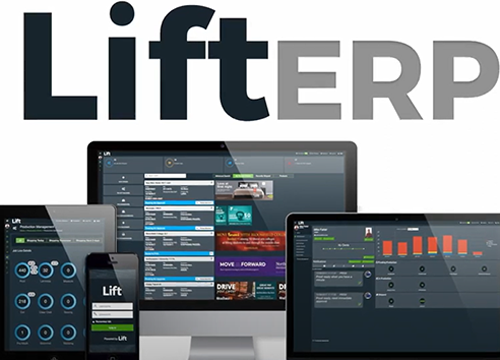
Durst Group founded the Durst Software & Solutions division in 2019 with a team of over 60 people to provide intelligent and straightforward software solutions to streamline the complete print process. They consist of Durst LIFT ERP, a cloud-based ERP/MIS system, Durst Smart Shop, a comprehensive premium e-commerce solution for customizable print products, and Durst Workflow, a high-end solution for fully automated management of prepress and production tasks. The solutions are tailored for digital printing and offer a 360-degree approach to optimizing printing processes in a mixed-vendor production environment.

Michael Deflorian, Business Unit manager at Durst Software & Solutions: “Durst is known for quality, both in hardware and now with Durst Software & Solutions in the area of print automation software. We wanted to serve our customers even better in consultancy and integration and make our product portfolio easily accessible. We started looking for an experienced integration partner in Europe, and Four Pees quickly appeared on our radar. They have their finger on the pulse of the global printing industry and a proven track record in delivering complex automation projects. When we started talking to each other, we found that we were very complementary the way we work.”

Tom Peire, CEO at Four Pees: “For nearly fifteen years now, we have helped automate print-process around the world at companies big and small. With an increased focus on integration services and an expanded team, this new partnership with the Durst Software & Solutions division is the next step in our growth story. Their vision from pixel to output perfectly aligns with our vision of implementing automation from A to Z. We look forward to working with the different regional Durst teams to help printing companies get the best out of their print production.”

To dive deeper into this, Four Pees will be organizing a Four Pees Café on their new partnership and Durst’s 360 approach to print automation on 05/05/2022. Click here to register for this webinar!


Read More

Doron Lerner · Owner · S.LERNER · Durst Expo 2022 Label

Doron Lerner is an Israeli printer offering extensive label services. From Flexo jobs to short run digital S.Lerner printing services every major sector in the label market from food to household to packaging. He describes the complexity of supporting manny product lines and explains how they work with the clients for the best result.

Read More

Durst Group installs 500th Durst Workflow Software at customer site

Brixen, Italy – April 19, 2022 – Durst Group, manufacturer of advanced digital printing and production technologies, announces the 500th customer installation of Durst Workflow Software. This milestone highlights Durst Group’s transformation from a press manufacturer to a solutions provider (“Pixel to Output”) in the digital printing industry. Founded in 2019, the Durst Software & Solutions Division now has more than 60 employees and has developed Durst Workflow, the most comprehensive software solution in the market that is also open to third-party providers, and successfully integrated it into its customers’ production.


Michael Deflorian, Business Unit Manager, Durst Software & Solutions explains:

“We are proud that more than 500 customers from different sectors rely on our workflow solution. With the help of their feedback, we try to improve our products every day to offer the best software ecosystem for the digital printing industry.”

Durst Workflow is the high-end solution for fully automated management of prepress and production tasks. Originally developed to provide the highest print quality for Durst printing systems, it is now also available for third-party printing systems. The complete browser-based solution has a user-friendly interface that allows the entire PDF workflow to be fully automated. Durst Workflow integrates seamlessly with the customer’s existing software environment, enabling a higher level of automation than comparable stand-alone products. Thanks to preconfigured corrections, data preparation is faster and more efficient, and the integrated, powerful color engine guarantees exact color accuracy right from the start. With Durst Workflow, it is possible to print more while using less ink, thanks to predefined color saving profiles that can be applied with just one click.

Serge Clauss, Product Manager, Durst Software & Solutions, explains:

“We develop software solutions that help our customers make their prepress and production processes more predictable and productive. Reaching 500 users with our Durst Workflow solution is a clear statement that we are meeting our customers’ expectations.”


Read More

Repacorp invests in SEI Laser Labelmaster to maintain maximum uptime and reliability

To maintain its reputation for reliability, speed and quality, Andy Heinl, vice president of digital labels at Repacorp has a robust equipment and facility contingency strategy. Heinl’s investment in a Labelmaster from SEI Laser is an important part of this plan. SEI Laser equipment is sold and serviced in North America through Matik.

Headquartered in Ohio with additional facilities in Wisconsin and Arizona, Repacorp Quality Labels and Packaging is a pioneer, adopting digital printing and laser cutting technology before many of their competitors. As a reliable reseller of stock and custom labels, tags, RFID, flexible packaging, shrink sleeves and wide-format products, Repacorp is dedicated to efficient, fast turnaround. To maintain its reputation for reliability, speed and quality, Andy Heinl, vice president of digital labels at Repacorp has a robust equipment and facility contingency strategy. Heinl’s investment in a Labelmaster from SEI Laser is an important part of this plan. SEI Laser equipment is sold and serviced in North America through Matik, Inc.

Founded in 1974, with its headquarters in Ohio and additional facilities in Wisconsin and Arizona, Repacorp has grown to a multimillion-dollar organization through acquisition and its strength in digital and flexographic printing. The company’s diverse capabilities allow them to deliver small to large orders. Primarily loyal to one brand of laser equipment since 2007, the company recently experienced downtime because of maintenance problems with their existing laser systems. In addition to lost productivity, some of the laser parts are being discontinued and maintenance costs in recent years have been expensive.

‘One of our workhorses is a laser machine we purchased in 2012 that contains SEI Laser components,’ says Heinl. ‘When we began experiencing issues with our other lasers, we reached out to SEI Laser and Matik, Inc. to get a quote on a new system. Matik has provided service for us previously, and we appreciate their fast response and dependable services.’

In addition to being well-known for reliability, SEI’s Labelmaster has a look similar to Repacorp’s digital printing equipment. Heinl ordered the new laser system with a modular finishing station for flood and spot varnishing as well as laminating. Its user-friendly interface makes it easy for operators to learn. A roll-to-roll and roll-to-sheet laser system, Labelmaster provides fast make-ready and on-the-fly cutting. It offers maximum web speed of 330ft/min(100m/min); web widths up to 13.75in (350mm) and roll diameters up to 24in (610mm); and can process a range of materials, such as PET, PP/BOPP and paper. Additionally, the Labelmaster is modular and can be modified for future capabilities with additional digital and conventional processes such as hot-foil stamping, slitting and sheeting.


Read More

Rondo Ganahl installs Koenig & Bauer Durst’s Delta SPC 130

Rondo Ganahl has unveiled plans to celebrate its 50th anniversary milestone and official opening of a digital print production plant in a 25 million EUR investment. The company in Styria, Austria, is determined to capitalize on continued business growth where digital production volumes continue to rise by 25 to 30 percent a year.

Taking center stage in the dedicated digital production facility is Koenig & Bauer Durst’s Delta SPC 130 single-pass press with water-based ink technology that is driving business growth and providing the food packaging industry solutions demanded by brands. The Delta SPC 130 has been successfully transferred across to the new plant and production has started as planned from the start of April.

The official opening ceremony for the new building together with the 50th anniversary celebration of Rondo St Ruprecht will be in September. The firm, which is part of the Rondo Group that has eight plants across Europe, invested in the Delta SPC 130 three years ago to start digital production – and has never looked back. About 90 percent of the Rondo digital printing business is for the food industry.

With lead times continuing to go down, Rondo says it must further develop the digital technology where the excellent print quality already matches litho production.
Karl Pucher, managing director of Rondo Ganahl St. Ruprecht, said, ‘It has been an incredible success story. Digital printing was a big step for us three years ago with an unknown future, but we have never looked back. The transformation is being driven by brands who need to get products to the market quickly, and with digital printing we are very fast from development to getting the products to customers, among them Lindt & Sprüngli who are very big in display products and have been with us on our digital journey from the start.’

Digital printing is the future and is really helping us get a whole raft of new customers. Quality is no longer a topic of conversation. Digital is a very important development for us because we now have a total solution for our customers that has been integrated into our whole plant process. We are running the SPC 130 very well in a two-shift operation, sometimes even in three shifts. We have a lot of customers in the food industry and one of the main reasons for going with Koenig & Bauer Durst is because of its food-safe inks. They provided all permissions we need for the food industry.’

Pucher added, ‘The interaction with Koenig & Bauer Durst is excellent – we are very happy with the support. We didn’t just buy a machine. We bought a complete system. The software is the main part because it helps us to optimize the printing and make the right decisions for customers.’

Robert Stabler, managing director, Koenig & Bauer Durst, said, ‘In a true partnership approach, we have been with Rondo every step of the way from its start in digital printing. Investing heavily in a dedicated digital production plant speaks volumes about where markets are heading – all driven by brands. “Converters increasingly recognise that they need a highly automated, reliable, versatile, and all-in-one digital solution for fast turnaround of jobs. Rondo is also a perfect example of how companies ensure jobs run seamlessly through their plants by investing in complete workflows and colour management systems.’


Read More