New paper machine for INDEVCO in Greece

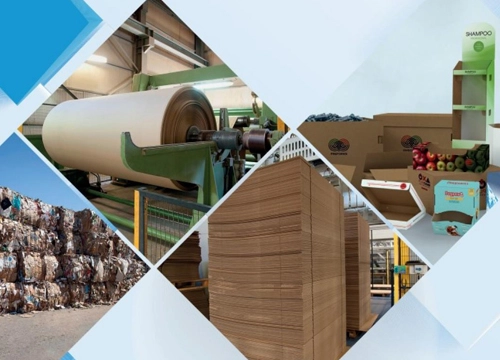
Unipakhellas, a member of INDEVCO Group, has contracted with Toscotec for the supply of a paper machine to be installed at Unipakhellas Central (UHC) mill in Pelasgia, region of Fthiotida, Greece. Unipakhellas aims to produce high quality testliner and fluting grades to Greek and export markets. The paper machine is scheduled to start up soon.

The new machine has a wire width of 3.0m and will produce corrugated paper in the range of 90 to 200 gsm at the maximum operating speed of 800 m/min, processing 100% waste paper. It features a two-layer Fourdrinier configuration with a hydraulic TT Headbox-SL. It is equipped with Toscotec’s shoe press TT Xpress, as well as TT SteelDryers, steam and condensate system, and stabilisation boxes in the dryer section. The supply also includes a hard nip calender, a hydraulic pope reel and the tail threading system. The scope is completed by mechanical drives, an enclosed hood, and air and ventilation systems. Unipakhellas selected a comprehensive service package with engineering, erection supervision, commissioning, training, and start-up assistance.

Fayssal Frem, Chairman of the Board and CEO, Unipakhellas, says, “Our decision to invest in Greece testifies to our belief that Greece is an actively growing market due to its geography and most importantly its human talents. The choice of Pelasgia’s strategic location not only makes commercial sense, but it is primarily driven by INDEVCO’s philosophy of furthering community development. We are confident that Toscotec will deliver on our expectations of high performance.”

Imad Issa El Khoury, Executive Vice President, INDEVCO Paper Making, says, “We are excited to partner with Toscotec on our first big project, which will enable UHC to serve the Greek and export markets with a wide range of high quality containerboard grades, supporting corrugated businesses to excel locally and in the European and Mediterranean markets.”


Read More

Why it is time to benefit from the production gains digital transformation delivers

Summary of the 7th SPC Open House at the Durst Innovation Center East in Lienz, Austria 23 February 2023

Highly efficient production, job versatility, run length flexibility and operational cost efficiency. These were some of the transformative benefits of adopting digital print production in corrugated packaging explored at the 7th Koenig & Bauer Durst SPC Open House at the Durst Innovation Center East in Lienz, Austria, in February.

Product Manager Matthias Krautgasser presenting

At the event, attended by more the 90 visitors, Robert Stabler, Managing Director of Koenig & Bauer Durst, detailed the digital value journey and illustrated some of the significant gains achievable that positively shape production capabilities. This included a focus on automation and standardization of processes with as few touch points as possible. Referencing a commissioned Fraunhofer institute study, he explored how attendees can better understand and optimize the total cost of the supply chain for their customers.

Other powerful calculations included TCO (total cost of ownership) of existing production volumes to evaluate whether an investment will pay off, where the volume break-even points are to ensure more accurate costings, and how the most effective technology utilization can be achieved.

These reinforced why, in today’s rapidly changing marketplace, converters and brands are having to review their strategies and consider how they can better embrace digital production.


Durst Innovation Center East


There were other benefits, too. Digital just-in-time print production can help reduce storage costs and obsolescence.

It is no wonder then, that in Koenig & Bauer Durst’s customer base, 50% to 80% of volume over time is for new added value applications. They include;

  • Mass customization with different product versions easily made more attractive for customers.
  • Sequential barcodes for track and trace packaging and products for logistics and pharma packaging making labelling obsolete.
  • New product offerings on uncoated board thanks to the amazing print quality possible with an eco look and feel on cheaper substrates.
  • Test and promotional packaging as a result of lower minimum order quantities to enable new marketing offerings.

Robert Stabler shared case study information that identified how best to assess which jobs should be run on the SPC and which should remain on existing technology. It also looked at how to manage a larger number of jobs cost effectively, ways to lower costs for shorter run lengths and how cost savings can be achieved.

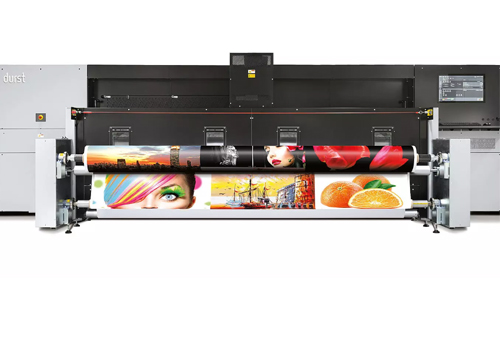
Among the highlights was the reporting of a break-even point between 6,500 square meters and 8,500 square meters and the potential to save millions of euros with a Delta SPC 130 single pass highly automated press – all in a highly sustainable way. Put simply, for shorter production runs of up to 8,500 square meters, digital printing is less expensive than current analogue methods. Moving these volumes to digital printing results in lower costs, faster turnaround time and much greater efficiency plus better utilization of existing plant machinery.

Just how this is made possible with Koenig & Bauer Durst technology was detailed during a press demonstration and a production tour. Highlights included an overview of non-impact printing – where fluid is transferred from the press on to the substrate without any pressure or touching of the board.

A close-up view inside the Delta SPC 130 press in Lienz

This has been achieved with two key technologies. First, Koenig & Bauer Durst has developed an inkjet priming system. Working differently to other primer solutions, operators have full control over the exact area where digital primer can be applied. It works similar to an additional separation and allows priming of “open flute” for premium packaging. More significantly, it enables converters to use a topliner that is 15-20% lighter and lower cost while still retaining all the necessary functional characteristics of the corrugated box.

Second, a special water-based, food safe and deinkable ink set has been developed with exceptional rub-resistant characteristics. This ink requires no Over Print Varnish and therefore no additional process that applies pressure or additional fluid to the board.

Robert Stabler, Jochen Drösel and Johannes Pieger

Attendees also learned how using digital primer has major benefits for print quality and creates opportunities for print embellishment on corrugated board, while at the same time reducing costs because lower-priced materials can be used in production. Up to 30% less ink is required. Orange and violet colours, were highlighted as having additional hugely positive impact on TCO (total cost of ownership) and colour gamut.

The event also shared news of a fourth machine order for Schumacher Packaging – this time in the UK. The plan is to have an all-digital plant in the UK, with the Delta SPC 130 the only printing press on site. It is the first six colour FlexLine Eco+ industrial production press to be installed. Among the major benefits are printing on uncoated with speeds up to 80 meters per hour, which equates to around 10 million sq/m for uncoated per year. The three other machines for Schumacher Packaging – two in Ebersdorf, Germany, and one in Wroclav, Poland – have also been upgraded to six colours, a decision driven by customers.


Attendees were keen to hear what Johannes Pieger, Digital Print Manager, and Jochen Drösel, Chief Sales Officer, had to say when they shared their insights regarding Schumacher’s growth strategy as a pioneer for digital printing.

The event wrapped up with a panel discussion featuring Johannes and Jochen detailing how digital transformation is at the forefront of their efforts in the corrugated packaging industry.

 

Read More

Durst Company History

Our success is about you. Creating success at Durst is all about you, our valued customers. You inspire us to develop the best large format printing products available by helping us understand the demands of the marketplace so we can shape what’s next. We would like to deepen our partnership with you and ask you to help us develop application success stories about you and your business. View our current successes.

Read More

Mobile 3D scanning of museum artefacts

Museums collect valuable artefacts of human history. Its is a window to the past. A large amount of statues, sculpture and and other historical objects present what is long gone. The preservation of the past and reverse engineering processes become possible with 3D scanning technology. Get insights into a scan of a historical statue here.

The goal: a precise scan for the replica of the statue Nike 

The War Museum in Greece is the largest museum of military history in the country and one of the largest in Southeastern Europe. It collects relicts of Greek history from all wartime periods. In honor of approx. 1600 Philhellenes who offered their services and often even their lives for the liberation of Greece, a monument is planned at the war museum.

For the Monument of Philhellenes the corrected statue of the well-known Nike (Goddess of Victory) needs to be replicated. The replica will be embossed in the center of the monument (Fig. 1). 

For this project, a 3D scan of the original statue is created in this application example. The data collected will later be used to produce the marble duplicate using a CNC cutting machine.

The challenge of scanning 

The challenge of the application is the creation of an exact scan and later duplicate of the statue.

The work here is complicated at first by the application environment. The confined space as well as the mounting of the statue on the wall makes scan data collection tricky.

With measurements of 1,2 m by 0,60 m the statue is a fairly large object to scan. Besides that, the original is characterized by the numerous details which should be maintained as best as possible. In order to achieve a realistic replica of the statue all details need to be collected accurately and reliably.

Both requirements have to be taken into consideration when scanning the Victory of Goddess.

The scan data must be as exact as possible since the statue is cut out of a marble block using a CNC marble cutting machine.

The solution for exact 3D scans

The digitized statue was the missing puzzle piece for the following replication.

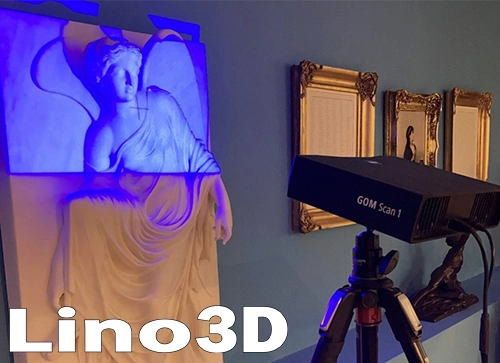
In order to scan as fast and precise as possible, GOM Scan 1 was used. Due to the fringe projection (stereo camera approach) and the blue light technology, the 3D scanner provides detailed and accurate meshes.

The light weight and compact shape of the GOM Scan 1 turned out to be particularly suitable for confined spaces of a museum. The measuring volume furthermore allowed the collection of fine and small details as well as the digitization of the medium-sized part.

Lino Integrated Printing Solutions executed this task. As a long-standing partner in our network, Lino is experienced in the use of 3D scan technology. Based on years long experience, they chose the GOM Scan 1.

Michalis Bratsolias from Lino Integrated Printing Solutions reported that using the fringe projection technology, it was even possible to scan the whole statue almost without reference points.

The scanner operates with the GOM Inspect software. It was extensively used to digitize the statue. Step-by-step it guided the user through the scanning process. Thus, an accurate measuring was possible due to the constant reassurance of the software.

In the museal application, the sensor and GOM Inspect software were simply the perfect duo:

One stop solution to scan, edit, repair and even more.

Have a look behind the scenes

Ready for some behind the scenes footage of the application and the final result of the replica? Keep scrolling to see the GOM Scan 1 in action!

Thank you to Lino Integrated Printing Solutions for sharing the interesting application example, showing the divers uses of the GOM Scan 1.

Read More

Introducing TRG’S New Digital Press /Durst SPC 130


The director of business development, Adam Shafer, describes how the addition of the Durst SPC 130 has transformed TRG’s capacity to manage customer needs and demands.

When TRG was looking to invest in technology platforms to create solutions for customers, the #durst SPC 130 high-speed digital press stood out above the rest as it gave high-speed and sustainable solutions that could also print on food-grade certified packaging. The aqueous spacing system, which is fully recyclable,  allows you to print on food-grade accredited packaging.
The fantastic print quality will enable us to produce at least 15-20 thousand sheets daily, meeting our client’s needs daily. The technology platform is above all others as the image quality is so detailed that you can almost grab the product from the packaging itself.

The director of value engineering and design, Jeff Jolley, notes how we can now offer all the solutions to our customer’s problems and needs with these high-speed presses.TRG can now offer variable print, go from sheet to press daily, and adapt quickly to our customer’s needs.

The VP of TRG Retail, Jude Cohen, says that one of the things they love the most is that we can give the customer more time to do what they want on the front end of a project, allowing them to make tweaks upfront on the fly and get the product out within a few days.

Kevin Paine, the project manager, further notes how it has improved the workflow at TRG.

Digital Manager, Joe Morgan, states that Durst has guided us in learning how the press works, teaching us all the tools to be independent.

Website: www.TeamTRG.com


Read More

ECO PASSPORT by OEKO-TEX®certification for Durst P5 Sublifix sublimation inks

This ink certification completes the overall sustainable package of the P5 TEX iSUB printer, whose breakthrough drying and sublimation concept already enables a massive reduction in energy consumption. 

OEKO-TEX® ECO PASSPORT is an independent certification system for chemicals, colorants and auxiliaries used in the textile and leather industry. During a multistep process, each individual ingredient in the chemical product has been analyzed to meet the statutory requirements. Certified products are safe to human and environmental health, can be used for ecologically responsible textile production and are listed on the OEKO-TEX® Buying Guide (OEKO-TEX® Buying Guide).

OEKO-TEX® STANDARD 100 compliance of the sublimation inks has always been very important to DURST, this now available independent confirmation by ECO PASSPORT of the P5 Sublifix Inks further confirms their efforts and responsibility to anchor impact reduction as a central argument in their customers’ production chains.  

Additionally, this certification enables the customers an accelerated and cost-optimized certification process of both, their production chain according to OEKO-TEX® STeP, as well as their final products according to OEKO-TEX® STANDARD 100.

Thus, obtaining the ECO PASSPORT certificate for the P5 Sublifix Inks also results in an immediate economic advantage for all customers using these inks.

Read More

2022 Pinnacle Product Award for Durst and Vanguard

Durst Image Technology and Vanguard Digital Printing Systems have received seven PRINTING United Alliance 2022 Pinnacle Product Award across multiple Output Device Categories.

Output devices are judged by measuring colour charts and then comparing them to industry specifications. “This is the only competition that reports on the percentage of Adobe RGB a printer can hit,” said Dawn Nye, Program Manager for Pinnacle Awards, PRINTING United Alliance. “Some categories were decided by tenths of a point, so fierce was the competition this year.”

The following products won 2022 Pinnacle Product Awards:

  • Durst P5 Tex iSub:awarded Roll-to-Roll Direct Disperse Ink on Textile category
  • Durst Delta SPC 130:awarded Single Pass printer category
  • Vanguard VR6D-HS:awarded UV/Latex Flatbed ($100K – $200K) category
  • Vanguard VR6D-HS:awarded UV/Latex Flatbed + White ($100K – $200K) category
  • Vanguard VR5D-E:awarded UV/Latex Flatbed (under $70K) category
  • Vanguard VKH900-HS:awarded RTR/hybrid/flatbed new technology category
  • Vanguard VKR3200:awarded Roll-to-Roll UV (over 80 in.) category

Becky McConnell, Marketing Manager, Durst North America commented, “We are always happy to take part in the Pinnacle Product Award competition, as it allows us another opportunity to highlight our exciting technologies – and we couldn’t be more proud to have won so many awards this year.”

Read More

INVITATION TO SYSKEVASIA 22

The exhibition will be held from 30 September to 03 October at the Metropolitan Expo, near El. Venizelos airport in Athens.

We invite you to visit our booth in Hall 2, Stand C30.

It will be our pleasure to exhibit the Durst Tau RSC portfolio of label and flexible packaging printers in a live presentation.


We will also showcase Durst Water Technology for corrugated printing with one or more passes, for printing with odourless water-based inks (Durst Water Inks) with excellent printing results.
The quality is comparable to offset with vibrant and bright colours. Water inks are suitable for primary food packaging.

Visit our booth and experience our Digital Label and Packaging Post-Print Processing Solutions as well.
GM with its compact and fast label processing machines, Sei Laser with its Laser system for processing materials on rolls for the packaging and label markets, and also Elitron with its large automatic systems for cutting and processing packaging and large format printing offer many reliable and productive solutions.

Read More

Grafimax celebrates 30 years in the market with an installation of Durst Tau technology in Brazil

Brixen, Italy – August 30, 2022 – Based in Blumenau, the Brazilian state of Santa Catarina, Grafimax migrated to the label segment looking for new opportunities and chose the Durst Tau 330 RSC technology to produce labels in small and medium runs.

Blumenau is known throughout Brazil as one of the cities with the greatest Germanic influence in its culture and history. The city has strong European characteristics, enchanting visitors with its architecture, gastronomy, nature, industry, technology hub, cold beer and parties. In recent decades, the region has become an area of intense and diversified industrial activity – perhaps one of the most thriving in South America, housing national and multinational companies from different segments.

It’s in this rich region that Grafimax has been working prominently in the label market. The print shop, which celebrates three decades in the market this year, started its activities in the traditional typography segment, gradually moving into offset printing and, more recently, investing heavily in the labels and tags market, in which it has has obtained remarkable results.

“We understood that there were many opportunities in the labels segment. Furthermore, it was a market where we could add more value to our service through special finishes, such as cold foil, lamination, screen printing varnish, among others. As we are in a heavily industrial area, there was demand,” said Elimar Reinhold, founder of Grafimax.

The success in the labels market, mainly serving companies in the beverage, toys, food and plastic sector, made Grafimax expand its production park, investing in conventional flexography equipment. However, with the growing demand for smaller print runs and special applications (such as customization), there was open the opportunity to invest in digital technology.

“We researched several brands doing quality tests. The equipment offered good quality, but Durst differentiated itself,” says Elimar, explaining the reasons for investing in the Durst Tau 330 RSC, the first in the southern region of Brazil. “It is equipment that will not only allow us to meet this volume of medium and small print runs with quality, but will also give us the security to expand the segments into areas where we still do not have much volume, such as cosmetics, pharmaceuticals, among others.”

Along with the Tau 330 RSC, the company also invested in a laser cutting system to streamline production.

In addition, Elimar highlights Durst’s structure in Brazil as an important decision factor in the investment. “In addition to the commercial team, Durst has a solid structure in the country, with a stock of parts, consumables, a technical team and a technological center for printhead repairs,” he said.


Read More

Durst P5 TEX iSUB production press and Lift ERP software become latest business drivers for MacroArt

Leatherhead, Surrey – 04/07/2022 – To meet the demands of continuing market growth, MacroArt has invested in technology and software from Durst, manufacturer of innovative digital printing systems and software solutions. The wide-format specialist has become the first UK & Ireland user of the P5 TEX iSUB dye-sublimation production press, enabling it to continue delivering the best print for its wide variety of customers, and follows investment in Durst’s Lift ERP integrated, highly automated software platform last year.

The Durst P5 TEX iSUB is the dye-sublimation printer with an integrated inline fixation (iSUB) for a one-step direct to fabrics printing process that is enabling MacroArt to meet the demand for high quality, high speed and sustainable graphics across all its sectors including exhibitions, live events, sport, property and retail.

The Durst iSUB contactless fixing technology ensures excellent colour consistency as well as extreme sharpness of detail in images and text, also blurring or bleeding of colour is eliminated.

Michael Green, MacroArt’s Managing Director, said: “Having invested previously in two Rhotex machines that gave us very good quality, reliability, productivity and versatility, and after significant research we once again partnered with Durst to upgrade our dye-sublimation print capability. Investing in the P5 TEX iSUB was a natural progression and one that doubles our capacity and changes a two-step process into a very fast one-step process.

“We are delighted with the results. The P5 is extremely impressive, particularly its quality, wide range of fantastic colours and speed, as well as its superb inline fixation feature. Having the ability to stitch two materials together online with no chop and change, means virtually no waste of materials which is extremely important with rising costs and shortages and is exactly the kind of feature that adds value to our customers.”

This latest investment comes off the back of MacroArt’s installation of Durst’s Lift ERP software in 2021 and continues the collaboration between both businesses. The new software provides automated real-time scheduling, documentation, proofing and client support in a true sense, delivering efficiency and sustainability benefits for MacroArt and its clients.

“At both a machine and software level our investment with Durst is ensuring MacroArt is at the forefront of the latest print technology,” said Michael. “By bolstering our efficiency and sustainability credentials, our P5 and Lift ERP solutions are aiding our company-wide drive to reduce waste, while producing the high impact, beautiful dye sublimation graphics our customers know us for.”

Peter Bray, Managing Director of Durst UK & Ireland, said: “The Durst P5 TEX iSUB is proving its reliability in 24/7 operation and delivering significant increases in quality, productivity and versatility to customers such as MacroArt. It’s brilliant that they have returned to pre-pandemic business levels. This new investment in our technology is a real sign of confidence for the future.”


Read More