RAPID 2019: Metal 3D Printing Interview with Desktop Metal

At the recent RAPID + TCT event, held in Detroit, the 3DPrint.com team saw many new products and innovations and spoke with many companies about what they were currently working on. While at the show, I stopped at the massive Desktop Metal booth to speak with Larry Lyons, the company’s VP of Product. The company was founded four years ago in Massachusetts, and has 3D printed nearly 10,000 parts on its desktop-based DM Studio System, which was launched back in 2017 along with the DM Production System just ahead of that year’s RAPID event.

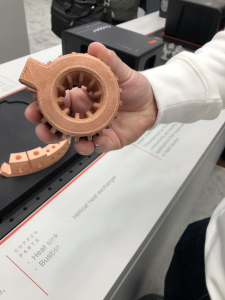
In the years since it came galloping onto the metal AM scene, Desktop Metal has been busy raising funds, increasing the production and expansion of its Studio System, and expanding its materials portfolio, adding options like 316 stainless steel, 4140 carbon steel, and copper. Lyons explained to me that it’s hard to control the laser melt pool when printing with copper which means that laser based 3D printing methods have struggled to print with the metal. Only some EBM users have made it work while very few (namely Italy’s Beamit) have made it work with DMLS. The issue is that the material is so conductive, but Desktop Metal is able to “print this material as fast as stainless steel,” compared to which it has better thermal conductivity.


Speaking of steel, the company is also offering H13 tool steel. Because this material is so tough, it’s often used for die mold making, but Lyons explained that lead times can be really long when making the molds with laser-based 3D printing systems.

“Desktop Metal can deliver the tool steel that customers want,” Lyons stated.

When I arrived at the Desktop Metal booth, I immediately noticed the metal 3D printed nametag that Lyons was wearing, which he told me was created on the company’s Studio System.

“DMLS is not cost-effective,” he said, noting that “Desktop Metal can show what the technology is really able to do with pieces like this [nametag].”

The company’s big mission at RAPID this year was to give attendees a closer look at some of the main customer applications of the office-friendly Studio System, and how it offers these customers more design freedom, in addition to major cost and speed savings.

First, Lyons told me that the company is installing its second Production System at a Fortune 500 company this month, and that millions of parts for use cases have been completed on the printer, including a drill bit that’s saved Milwaukee Tool a lot of money. Additionally, Desktop Metal announced during RAPID that it has entered into a strategic partnership with Indo-MIM, the world’s largest supplier of Metal Injection Molding (MIM) precision-engineered products. Together, the two plan to accelerate the adoption of metal 3D printing around the world, and Indo-MIM will soon install the DM Production System at its Texas facility.

But, while some Production customers allowed Desktop Metal to showcase some of their parts at the show, they “can be pretty tight-lipped about using their names.” Lyons said that this is not the case with Studio System customers – Desktop Metal has collected data and use cases on over 1,000 customer benchmarks to get a good feel for how these parts made on its machine are being used.

Several leading companies shared their Studio System experiences and applications with Desktop Metal, and the company reports that each one of the parts it’s looked at has shown a major reduction in cost, in addition to time. The top three applications customers are using the DM Studio System for are:

  • Functional prototyping – 45%
  • Manufacturing jigs, fixtures, & tooling – 40%
  • Low-volume manufacturing for end-use parts – 15%


Applications in functional prototyping require parts that meet specific chemical and thermal requirements, and most customers need prototypes to be fabricated in the same materials used for mass production. According to an email from Desktop Metal, John Zink Hamworthy Combustion manufactures the UHT Atomizer fuel nozzle, which is often used in combustion engines for steam propulsion boilers on LNG tankers. This nozzle can only be manufactured with 3D printing, and was redesigned to be more fuel-efficient; it was printed on the DM Studio System out of 316L steel, and then went through surface finishing for final use.

It can be lengthy, difficult, and costly to manufacture tooling like extrusion dies and inserts for injection molding using traditional machining. Jigs and fixtures made up 25% of the early applications on the Studio System, with tooling at 15%, as having the in-house metal 3D printing makes it possible to iterate and replace worn out tooling more quickly, which helps reduce tooling lead times.

Alpha Precision Group (APG), which provides MIM, valve assemblies, highly-engineered components, and powder metal fabrication, uses the DM Studio System to make fixtures that have to be able to continue performing after repeated uses.

Those who use the Studio System say it’s helping to enable low-volume production of pilot runs and custom, aftermarket, and replacement parts, for which methods like CNC machining and casting are not ideal. Mining equipment drilling solutions provider Master Drilling is using the metal 3D printer to produce replacement parts on-demand, and ended up with a 25% cost savings, in addition to reducing the lead time down from eight weeks to just one, for a sun gear made out of stainless steel.

Lyons told me that Desktop Metal is “moving past just medical and aerospace” applications, and is creating more automotive parts, in addition to products like a shower spindle for a hotel bathroom.

“We may not necessarily see these parts, but we touch many of them often,” he said.


Owens Corning normally uses Inconel to 3D print fiberglass insulation so that it can hold up in extreme temperatures, but Lyons explained that this material is costly and difficult to shape. With the DM Studio System, the company is majorly reducing the cost, and making it easier to create, these and other parts, including augers. Caterpillar is using the DM Studio System to help keep its tooling up to code, as it has a 40-year spare parts agreement with its customers; 3D printing parts like housings on-demand helps the company eliminate unnecessary overhead.

Then, Lyons walked me across the booth to meet Senior Software Engineer Andy Roberts, who created the company’s Live Parts generative design software. The Live Parts tool is designed to actually grow parts for AM, as well as integrate with SOLIDWORKS as a plug-in.

Roberts then demonstrated Live Parts, and its ability to optimize the strength-to-weight ratio of a product in real time, with a design for a skateboard truck. He explained how it was easy to increase the forces in order to see real-time part growth.

“A lot of parts, like this skateboard truck, are all cast, and cast parts typically are fairly simple – they don’t have a lot of undercuts and features that would require machining or post-processing,” Roberts explained. “But when you go to 3D print a part like this, there’s no need to adhere to the simplicity of that. You can make it lighter and stronger. The question is, how do you know what to do?”

Answering his own question, Roberts turned to a nearby computer, which had a design for the skateboard truck already pulled up in Live Parts. He later told me that it had only taken three minutes to “grow” the part.

“It’s literally growing this part in real time, as though it’s a living organism.”

He showed me one example of the truck where the team told Live Parts to grow the design inside the existing part, “like a cage,” but said that it wasn’t “very interesting.”

“And then we kind of let it go crazy,” Roberts went on. “We said, well, you can’t grow into the other parts, but when you let it really go and do its own thing, it gets much more organic. And so these become lighter and stronger, depending on the material you’re using, because it generally tries to push the material out far away from the core. It’s more like the way a tree would behave.”

Read More

French army installs two Prodway P1000 3d printers for manufacturing spare parts

French industrial 3D printer provider Prodways has revealed that the French Armywill be integrating two of its ProMaker P1000 3D printers into its operations.

The systems were ordered by the Integrated Structure for Maintaining Land Equipment in operational condition (SIMMT), a division of the French Army focusing on the operational maintenance of land equipment for all Army units. SIMMT will equip the P1000 3D printers to help validate the advantages of 3D printing for manufacturing spare parts in real conditions. Both systems plan to be delivered to the French Army by summer 2019.

The French Army has ordered two ProMaker P1000 3D printers from Prodways. Image via Prodways.

3D printing for on-site manufacturing of spare parts

Both P1000 3D printers will be utilized by the French Army to different ends, with Prodways supplying the materials, as well as training the operators on how to use the two systems.

The first ProMaker P1000 3D printer will be packed into a container and transported on missions for deployment in external operations. The 3D printer will specifically be used to produce spare parts on demand in full autonomy, enabling the French Army to determine the benefits as well as the drawbacks of using additive manufacturing on site.

On the other hand, the second P1000 3D printer will be fixed in France at the Tulle detachment of the 13th Material Support Base (BSMAT) for the ‘Matériel’ arm of the French Army, which specializes in maintenance and repair of equipment or hardware. The Material Support Base will work towards ensuring operational support of the deployed additive manufacturing chain.

French minesweeper during external operation of the French Ministry of the Armed Forces. Image via Ministry of the Armed Forces

Increasing military implementation of additive manufacturing

Additive manufacturing is now being employed in a growing number of applications in defence sectors around the world. The U.S. Army has demonstrated a strong advocacy for using the technology, where it has been implemented for inventory reductions as well as ensuring the availability of certain spare parts, amongst other specific case studies.

With the French Armed Forces now following suit, additive manufacturing could present various opportunities for manufacturing parts within the French Army, Navy and Air Force similar to those within the U.S. Army.

For example, the U.S. Army has recently engaged in a project launched by additive manufacturing accelerator America Makes to integrate 3D printing into its supply chains. 3D printing is significantly providing a number of inroads to on-demand and on-site production of parts within the military and civil aerospace sectors as well, with the U.S. Air Force utilizing the technology to print low-cost replacement parts for legacy aircraft.

Read More

5 benefit of label digital printing by Pyrotec

Five Benefits of Digital Label Printing

Pyrotec, April 2019:

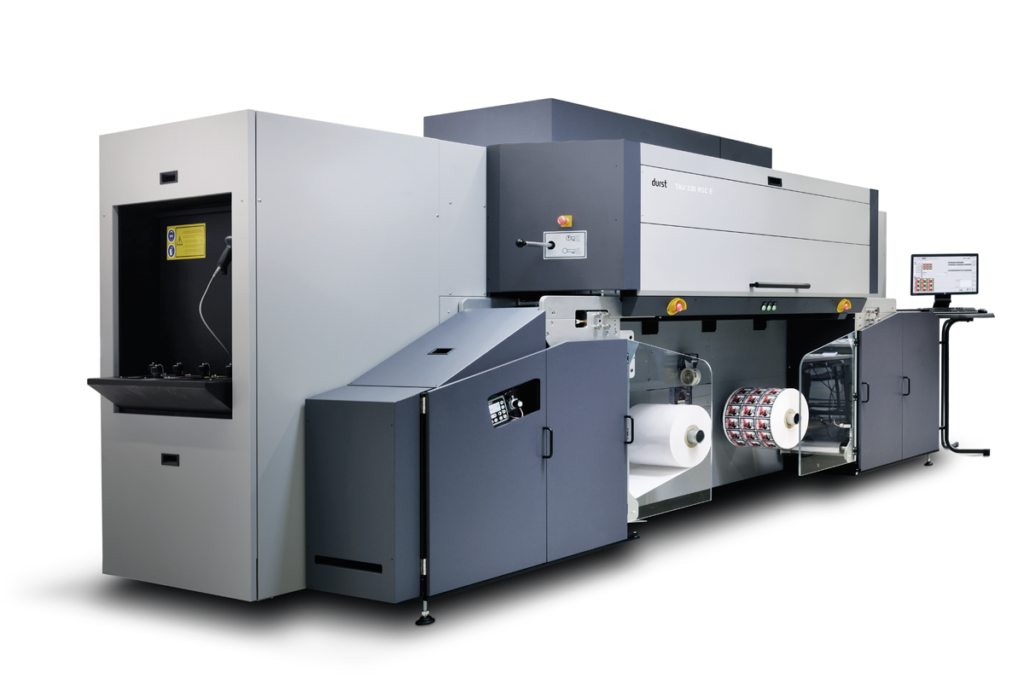
In March this year, with a clear vision for the future to drive growth, Pyrotec PackMedia announced a ground-breaking first for Africa – the purchase of a Durst Tau 330 RSC eight-colour digital label press.

‘We chose the Tau 330 RSC digital label press to drive our new market growth and maintain high customer service levels,’ explains Timothy Beattie, Pyrotec PackMedia’s general manager. ‘Importantly, we wanted a digital label press that would reduce turnaround times and provide customers with short print runs,’ he adds.

So, what are the benefits of digital label printing that Pyrotec PackMedia now offers customers?

Fast turnaround times
Unlike flexographic printing, digital printing doesn’t require plates. And, because set-up time is significantly reduced, this means customers receive their orders faster.

Attention-grabbing high quality
Because brand owners are constantly working to ensure their products have the most shelf shout possible, a product label carrying high-quality graphics and colours is essential. ‘Durst offers the most advanced technology, the best print resolution (1200 x 1200dpi), printing speed (78m/min), and printhead design (continuous ink circulation) of all the presses we investigated,’ Timothy explains.

The Durst Tau 330 RSC digital label press offers eight colours, achieving between 95% and 98% of the Pantone colour gamut, and, when the same substrate is used for consecutive jobs, set-up time and material waste are almost zero.

Short-runs
For digital printing, the DTP department prepares the electronic file to be printed. Consistency between reprints is guaranteed because there’s no opportunity for human and set-up errors.

Cost saving
Customers order only the number of labels they need, saving on storage space and ensuring that changes to on-pack product information can be made quickly and with very little waste.

Design flexibility
Digital presses offer great flexibility, especially for variable or personalised data printing. For customers who need to change text, graphics or images, digital technology enables operators to make changes on-the-fly without losing valuable time. This is also very beneficial for on-pack changes that need to be made quickly, or for promotional campaigns or seasonal changes.

‘We expect the Durst Tau 330 RSC high-speed label press to increase efficiencies and enhance our product and service offerings. With this latest digital technology, we can enter entirely new markets because we can print on a variety of materials including unsupported film,’ Timothy concludes.

Contact Pyrotec today to discover the benefits of digital label printing for your business.

Read More

Me & my: Durst Rhotex 325

Last July, Cardiff based large-format print specialist 3 Sixty expanded its textile printing with major investment in a 3.2m dye-sublimation printer and associated ancillaries.

Together with the skilled seamstresses who sew and finish the products, the new kit is now responsible for 25% of the company’s business, according to managing director Richard Inkin.

He and business partner Ben Newton set up 3 Sixty in 2010, having entered the printing sector 10 years earlier following an early career with the merchant bank Coutts. “One of my clients was a printer and basically asked me whether I fancied a change? It was 2000 and it was just the right time with the way the banking industry was going.”

The basis of the company is its three-word marketing message and offering: ‘Audit, Print, Installation’. Audit means getting to know the customer’s needs and suggesting the solution, including offering agency design services. “We are very good listeners; it’s a key part of our service,” says Inkin. “We listen first and then impart our plan to deliver excellence to our clients.”

Printing is through a range of wide format inkjets, primarily a pair of EFI Vutek UV machines, a QS2000 and a GS3200 which were joined by a new Durst P10 250 HS Plus UV hybrid at the same time as the Rhotex 325, plus a 1.6m HP Latex printer, which can also be used for textiles as well as wall coverings. In the past three weeks it has installed a PrintFactory modular automated workflow to handle colour management and job scheduling.

Installation is the third arm of the service, with 3 Sixty able to take on anything from a single site up to full retail chains of hundreds of stores in a seven- to 10-day period. Installers go in with handheld devices linked to 3 Sixty’s cloud system so they can photograph and document the process for customers to see.

The main business areas it works with are POS; exhibitions, events and brand activation; window displays; interior design (fire retardant textiles, wallpapers, flooring, window films); and signage.

Inkin says the main textile applications are “both supplied on the roll or converted by our skilled seamstresses into soft furnishings, such as curtains, cushions, bolsters, covers, tablecloths and roller blinds.”

Other textile work is what’s loosely classed as soft signage or plastic coated banners – flags of various styles and shapes, drapes, tension frame systems, exhibition graphics, fence and crowd control scrim and barrier jackets. Welders and eyeletters are used to finish the banners.

A pair of Zünd digital cutting tables are used to cut simple or complex shapes. 3 Sixty employs three or four seamstresses depending on the workload and has a variety of industrial sewing machines for them to do the assembly work on. “For more capacity we recently installed a second Zünd G3 3.2m machine to cope with the additional demand created by our fabulous new investments,” says Inkin.

“We make simple and complex products, from bolster cushions and curtains to bespoke bar covers. The speed of the Zünds gives our skilled finishing team the time to really add value and create all manner of products. We’ve got seven or eight different sewing machines that are used depending on the type of finish that’s required.”

The Durst P10 250 HS Plus installed at the same time as the Rhotex was intended to expand capacity for existing work, says Inkin. “Being a hybrid machine it allows us to print both rigid and roll media at high speed with exceptional quality. We can run high-quality banner work, wall wraps, direct-to-substrate to a variety of media, from the everyday Foamex and Correx boards, to more bespoke requirements such as adhesives, acrylics and more sensitive plastics and now environmentally friendly options to plastics. The P10 sits alongside our UV Vuteks and HP Latex machines. We use our P10 for commercial wallpapers and we do also use the Latex for smaller more decorative projects.”

Why choose the Rhotex 325?

This was 3 Sixty’s first dye-sublimation printer, Inkin says. “We printed fabrics by UV before, but this process is not as good. We also run some display work on HP Latex.” He says the attraction of the dye-sublimation inks is they preserve the natural ‘hand’ feel of textiles, unlike UV and Latex inks that stay on the surface and alter how it feels and flexes.

“The dyes are infused into the substrate rather than applied to the top level and therefore it doesn’t crack, it doesn’t fade, it doesn’t peel away from the substrate,” he says. In addition UV inks can’t be used with fabrics that contact skin, such as garments and soft furnishings,” he says.

“The reason we bought the Rhotex is not only because it’s the best in its class for quality, reliability and speed, but also because of Durst’s water-based disperse dyes. They are labelled Oeko-Tex Standard 100, meaning they work perfectly across a wide range of media. We can print onto wide width fabrics up to 3.2 metres wide, but a lot of textiles are still only woven at 1.5m (60in) so we can be very flexible with our approach to what we can offer.”

The Durst Rhotex 350 is a 3.5m-wide inkjet printer that uses water based dye-sub inks and can run at a maximum of 390m²/hr, though the higher quality ‘production’ and ‘backlit’ modes are 170m² and 130m²/hr. It uses Durst’s own WTS variable drop size piezo print head technology that’s tailored to water-based inks and incorporates an automated nozzle cleaning system. It can feed both transfer papers and textiles roll-to-roll. There’s an integrated hot air dryer, though final heat sublimation has to be done as a post-process.

Media expertise

3 Sixty uses its Rhotex for both direct printing to the textile and for printing on to paper for later transfer to the textile as a separate post-process. “We use both and have built our knowledge base with support from Durst, our media suppliers and having the internal expertise to test and evaluate the best products to fit our customer’s needs,” says Inkin.

“We find that most of the display fabrics we run can be printed direct to substrate. However, we always use paper transfer for any substrates that have any elastane content or our furnishing range, to ensure the highest quality finish.” Elastane is used for stretchable fabrics such as Lycra/Spandex.

The dye-sublimation process requires textiles to have a high proportion of polyester fibres, which absorb and bond with the vaporised ink pigments in the heat fixing process. “We have a very varied range of substrates that we print on our Rhotex, these are all 100% polyester bases but some have up to 5% elastane content,” says Inkin.

“We haven’t yet tried any mixed textiles, ie poly-cotton mixes, simply because so far our clients have not requested this. The concern would be the wash fastness of the dyes on the mixed fibres, with potential issues with dyes running, fading or not fixing to the base cloth in the first place.”

The Rhotex is only one part of the dye-sublimation jigsaw, Inkin points out. “To fix the print, a heat press is essential, as well as a good pre-press setup from artwork supply and creation to processing, and finally the people to make the most of this kit, from sales staff, account handlers, to raise awareness of the possibilities, pre-press and operators to find the best way.”

A Monti Antonio calendaring machine is used for both heat sublimation and fixing of directly printed material, or for heat pressure and fixing from transfer paper in contact with the blank textile rolls.

Promises delivered

“The machine was operational within three weeks, but even with skilled operators it has still taken us months to really understand how to get the best out of the machine,” says Inkin. He praises the print quality, saying: “It has certainly lived up to all the promises we were given. It has opened up the markets we targeted.”

Any noteworthy issues? “People’s knowledge of the dye-sublimation process is key. It is also critical to have a temperature and humidity controlled environment for the machines to work in,” he says.

Would he buy it again, or recommend it to others? “Absolutely.”

SPECIFICATION

Process Piezo inkjet with dye-sublimation aqueous inks

Media types Transfer paper, or coated and uncoated polyester fabrics

Max print width 3.2m

Colours CMYK (options for light cyan, light magenta, light black and PCA)

Resolutions 400x600dpi (7-14-21pl drops); or 800x600dpi (7pl drops)

Throughput Backlit Mode 130m2/hr; Production Mode 170m2/hr; High Speed Mode: up to 390m2/hr

Media width 3.2m

Price Starts at £275,000

Contact Durst UK 01372 388540 www.durst-group.com

Company profile 

Established in 2010 by Richard Inkin and Ben Newton, 3 Sixty offers a wide range of large-format printing and installation services, recently expanded with its dye-sublimation textile printing and finishing services. “We thrive working in the retail, events, marketing, hospitality, leisure and manufacturing sectors,” says managing director Inkin. “Since the start we have enhanced our offering every year through the purchase of super-wide format, small format and dye-sublimation printers.”

In February, the company moved into new purpose-built premises in an industrial park in Cardiff, doubling its floor area to 2,600m2. It employs 36 people and anticipates a £3.8m turnover for the year up to the end of March. Last year it was £2.9m.

Why it was brought…

3 Sixty wanted to expand its product line in textiles for soft furnishings and soft signage, but wanted to avoid UV or Latex systems in order to maintain the ‘hand feel’ of the fabrics. These products now account for 25% of business.

“It’s brought a diversity to our company, the new ranges of products and services we can offer to our clients has opened up new and exciting opportunities,” says Inkin.

How it has performed…

While the machine has required some trial and error to get perfect results and demands a good pre-press setup, Inkin is well pleased and says it has lived up to its promise. “It has opened up the markets we targeted,” he adds.

Read More

ZWF, The Netherlands

“Nothing compares anywhere near to Durst. And the investment in the P10 was an easy decision to make” – Geoffrey Shippers, Owner, ZWF

ZWF is a creative sign and reclameakers serving mostly regional customers in The Netherlands. It’s never looked back since investing in Durst systems, first an Omega in 2011, a machine recently replaced by a Rho P10 160 for its production facility in Friesland.

“The amazing photo quality print quality has helped transform our business since we started offering products direct to consumers via our Photogifts.nl website,” said ZWF owner Geoffrey Shippers. “We have grown our internet business turnover seven-fold in a short space of time – and just about everything there apart from textiles is printed on the Durst.”

ZWF was founded in 2005 and has built an experienced team that provides tailor-made, customized solutions in design, advertising and sign markets. All are produced by its experienced in-house team, which, as a result, it says means ZWF can pay extra attention to quality and deadlines. And the icing on the cake is flexibility to finish the productions neatly at a customer’s location.

A big turning point for ZWF was moving into internet sales in 2010, and that side of the business really began to take off after search engine optimization was perfected. Photogifts.nl is now an established brand, with sales now representing 30% of ZWF’s growing turnover.

“The quality of the Durst Omega is terrific, particularly the colours, and it was three to four times faster than our previous machine. As our business has grown, we need more capacity. We looked at other manufacturers because we wanted to thoroughly test the market, but nothing compares anywhere near to Durst. And the investment in the P10 was an easy decision to make really. An added benefit is the fantastic quality achieved with the white option and we’re printing much faster on substrates such as acrylic, canvas, aluminium and wood.

“The P10 is extremely reliable – it has to be for our work – and we’re now printing even faster and with super-high quality. Everything we were promised when we visited Durst’s manufacturing site in Lienz, Austria, has been realised. We were most impressed at the set-up and being able to do live demos. Durst staff are extremely experienced and professional and made us feel most welcome. And the technical back-up service is very good if we ever have a problem, which is very rare.”

Read More

INDO-MIM and DESKTOP METAL announce strategic partnership to accelerate the Global Adoption of METAL 3D PRINTING

Indo-MIM, The World’s Largest MIM Company, has Reached Agreement with Desktop Metal to Deploy Metal 3D Printing At-Scale with the Production System.

BURLINGTON, MA, May 21 — Desktop Metal, the company committed to making  metal 3D printing accessible to manufacturers and engineers, announced today astrategic partnership with Indo-MIM, the global leader and world’s largest supplier of Metal Injection Molding (MIM) precision-engineered products with over 100 million metal parts produced annually for leading global OEMs. Together, Desktop Metal and Indo-MIM will offer innovative solutions to enable companies around the world to design and produce metal additively manufactured parts at scale and shorten time to market.

As one of the first companies to deploy the Desktop Metal Production System in its state-of-the-art factories, Indo-MIM will draw upon its renowned expertise in design, tooling, sintering, materials, and its full range of finishing and  assembly operations, to deliver high-precision metal 3D printed parts to companies spanning the automotive, aerospace, medical, industrial machinery industries and more. As a strategic partner, Indo-MIM will become a full-service manufacturing partner for Desktop Metal, providing companies looking for a wide range of mass production with quantities of high-quality metal parts, ranging from tens of thousands to one million. Indo-MIM will also offer customers consulting services around downstream manufacturing and finishing processes key to going to production with metal additive manufacturing.

“This is a major step forward in the progress of additive manufacturing,” said Krishna Chivukula, Jr., CEO of Indo-MIM. “As the world’s largest MIM house, we know our customers in automotive, aerospace and other key industries will reap the benefits of this new mass manufacturing technology. We are excited to partner with Desktop Metal to bring metal additive manufacturing closer to those companies looking to achieve the speed, cost, and quality benefits to their businesses. With the Production System now joining our state-of-the-art factories, we will be fully integrated to provide customers with a one-stop resource for the manufacturing of complex precision components and sub-assemblies with additive manufacturing.”

Powered by Single Pass Jetting technology, the Production System is the world’s first and only metal 3D printing system for mass production that delivers the speed, quality, and cost-per-part needed to compete with traditional manufacturing processes. More than four times faster than any binder jet competitor, the system offers a 100 times

speed improvement over any laser-based system. The Production System, which is designed to print a broad range of alloys, including reactive metals such as titanium and aluminum, enables the use of metal powders that are 80 percent lower cost than laser powder bed fusion metals, delivering parts at 1/20th the cost. Designed around the MIM chemistry and powder supply chain, the Production System allows access to a large and established ecosystem of low-cost, high-quality alloys with a mature supply chain and well-studied controls.

“The synergies of our companies are profound — both Desktop Metal and Indo-MIM are deeply rooted in MIM technology and we share an unbridled commitment to accelerate the availability of industrial additive manufacturing technologies,” said Ric Fulop, CEO and co-founder of Desktop Metal. “This collaboration with Indo-MIM will help deliver the power and promise of our Production System to companies with diverse manufacturing needs and to shift the paradigm from prototyping to include full scale metal manufacturing.”

Indo-MIM will install the Production System in its San Antonio, Texas factory this summer and begin working with customers as early as fall 2019. For more information, interested companies can visit desktopmetal.com or call 734-834-1565.


About Indo-MIM

Indo-US MIM Tec. Pvt. Ltd., global leader in supplying precision-engineered products using Metal Injection Molding (MIM) as the core manufacturing technology. Since the time the company’s first part was molded in 1998, Indo-MIM has grown to become a leading global supplier of Metal Injection Molded products. The MIM process combines the design flexibility of plastic injection molding with the strength and integrity of wrought metals to offer cost effective solutions for highly complex part geometries.

Today, Indo-MIM has achieved a leadership position in the field of MIM, providing precision-engineered products to customers in more than thirty countries in the Americas, Europe and Asia. Indo-MIM is a fully integrated MIM parts producer with capabilities and proficiency in design, tooling, materials and a full range of finishing and assembly operations.


About Desktop Metal

Desktop Metal, Inc., based in Burlington, Massachusetts, is accelerating the transformation of manufacturing with end-to-end metal 3D printing solutions. Founded in 2015 by leaders in advanced manufacturing, metallurgy, and robotics, the company is addressing the unmet challenges of speed, cost, and quality to make metal 3D printing an essential tool for engineers and manufacturers around the world. Since its inception, the company has raised $438 million in financing with a portfolio of strategic

partners and investors including Ford Motor Company, GV (formerly Google Ventures), GE Ventures, BMW iVentures, Koch Disruptive Technologies, Lowe’s, New Enterprise Associates (NEA) and more. Desktop Metal was selected as one of the world’s 30 most promising Technology Pioneers by the World Economic Forum and named to MIT Technology Review’s list of 50 Smartest Companies


About Indo-MIM

Indo-US MIM Tec. Pvt. Ltd., global leader in supplying precision-engineered products using Metal Injection Molding (MIM) as the core manufacturing technology. Since the time the company’s first part was molded in 1998, Indo-MIM has grown to become a leading global supplier of Metal Injection Molded products. The MIM process combines the design flexibility of plastic injection molding with the strength and integrity of wrought metals to offer cost effective solutions for highly complex part geometries.

Today, Indo-MIM has achieved a leadership position in the field of MIM, providing precision-engineered products to customers in more than thirty countries in the Americas, Europe and Asia. Indo-MIM is a fully integrated MIM parts producer with capabilities and proficiency in design, tooling, materials and a full range of finishing and assembly operations.


Read More

Switzerland-based converter Label Center has reported success with its Durst Tau 330 E single-pass inkjet press.

One year on from its foundation, Switzerland-based converter Label Center has reported success with its Durst Tau 330 E single-pass inkjet press.

Turnover has tripled to CHF 1.5 million (EUR 1.3 million) this year, said owner Hossam Elgendy, While employee numbers at the converter are expected to triple within the next five years.

Elgendy formed Label Center, located just outside Zurich, in November 2017, but didn’t start any production until the Durst Tau arrived in April last year. ‘We had no cash coming in, so it was imperative to start production as soon as the machine was installed,’ said Elgendy. ‘It is no exaggeration to say that without the Durst Tau we couldn’t have started the business like we did.’

‘Market demands are for small and medium runs requiring fast turnarounds at a competitive price, which can only be done digitally. We look at the technical requirements and when all the criteria matches, it means that we can often do jobs for two-thirds of the usual price for customers. What makes me very happy is that big print owners and brands are asking for prices directly, and some conventional printing companies have started sub-contracting work to us. Having a highly-reliable digital press in-house means customers sometimes place orders when they visit.

‘Digital already accounts for 60 percent of our work, but this will increase because I expect to have two digital printing lines working two-shifts over a five- or six-day week within five years and be employing 12 to 15 people. Our business plan was to break-even by the end of 2018, but we achieved that in August.’

Even potentially challenging jobs such as black on white with three different variants on each label – barcoding, numbering and QR codes – are becoming a money-spinner for Label Center. And work previously hot-foiled is now being done digitally on the Durst Tau, which also benefits from what Elgendy describes as fast, efficient, powerful and easy-to-use Durst Workflow Label software. ‘The order was only for 500 labels, but 20 different variants for just one job. The customer saved 1,000 CHF for this one job,’ said Elgendy. ‘It could not have been done conventionally.’

He added: ‘We are a service provider, not just a printing company. What was also really important for us was the trust. We have always had the feeling that Durst and Jetpack were also putting their heart and soul into this new venture as well. They believed in us. Here we have a happy, experienced team and fast decision-making. We are hoping to achieve CHF 1.5 million turnover this year, then I plan to take my first holiday.’

Helmuth Munter, Label & Packaging Printing segment manager for Durst, said: ‘The Durst Tau E was launched to bring affordable digital production to increasing numbers of converters. It’s also proving to be a real attractive prospect for forward-thinking companies and start-ups like Label Center who need variable, versatile, adjustable and configurable machine systems to expand their business reach.’

Read More

FESPA 2019: Horizon signs deal for 3rd Durst system in major investment program

Dublin, Ireland / Leatherhead, UK – 20.05.2019 – Horizon, the award-winning digital print and design specialist, used FESPA 2019 to complete the signing of a third Durst production system as part of a move to future-proof its fast-growing business in the final stages of a major investment program in Dublin, Ireland.


Durst, manufacturer of advanced digital printing and production technologies, has agreed terms to supply a Durst Rho 1312 fully automated with a Smart4 speed advancement tool that improves speed and productivity by 40%. Horizon already has Durst P10 25O HS and Rho 1312 print production systems, which are also automated systems.

Family-owned Horizon is only weeks away from opening an extension to its head office on Navan Road, Dublin, where it has been located for the last 26 years. Having a new facility nearby, yet in a separate unit, ensures continuation of the company’s disaster recovery planning. The company’s expansion also includes new finishing machinery.

Horizon was formed more than 30 years ago and employs over 80 staff. With a design and print hub, it specialises in retail, POS, outdoor advertising and interactive digital in Ireland and works for a cross-section of clients, including blue chip companies. Horizon has won accolades in marketing and print awards.

Tony Gillen, a director at Horizon, said: “Our decision to once again partner with Durst was an easy one. The Durst 1312 Automate is state of the art and will increase our capacity significantly. The consistency of the Durst printer ensures there are no colour variations in print runs from start to finish. As for colour matching, the Durst matches the Pantone spectrum more accurately than any other machine in its class.”

Mr Gillen added: “We pride ourselves on our ability to react to our customers’ needs without compromising on quality, the cornerstone of our business model. The team at Durst give us the confidence to develop our business further, as partners they too provide second-to-none service and support. Durst provides us with the confidence to meet our clients’ needs.”

Peter Bray, Managing Director of Durst UK and Ireland, said: “Horizon is another prime example of how forward-thinking companies are recognizing the significant benefits of continuous investment in latest technologies. We’re delighted that the success it has already had with our technology made it an easy decision to invest again with Durst, which I’m sure will increase Horizon’s profitability and help the team to win more awards.”

Read More

Haitoglou S.A. chooses Durst Tau 330LM

Haitoglou SA Graphic Arts has been active since 2008 in the markets for adhesive labels and flexible packaging in the food and beverage, personal and household hygiene, cosmetics and industrial products sectors and offers complete printing and finishing solutions.

Permanent aim of the company is the complete integration and development through the continuous investment in modern equipment and specialized personnel.

At the company’s premises in Kalochori, Thessaloniki, in an area of ​​2,500 sq.m. are housed all departments involved in the production process.

A purely integrated plant with in-house departments of prepress, press and the other departments, which makes it possible to offer high quality services, from first contact with the client and after delivery of the final product.

In 2018, as part of the modernization of Haitoglou Graphic Arts SA’s equipment, a new digital printing department is launched, in a new building. Existing digital equipment were   transferred to the new building and an investment in a Durst Tau 330LM UV inkjet printer has been materialized.

Mrs. Denis Haitoglu, owner of the company, stated regarding this new investment:

“Our company has been investing in digital printing since 2014 following the market trend and the needs of our customers.

With the existing equipment we have covered a great part of digital printing needs. The unique printing results of the DURST press was something we wanted to add to our portfolio. Another motivation was the extra colors offered by the machine as well as the sense of silk screen printing.

Apart from its expanded customer base, our company also serves the needs of HAITOGLOU BROS SA, a company with a strong export orientation and with top collaborations with foreign brands at high standards.

LM Ink technology will help Haitoglu Graphic Arts to serve large companies and be placed as an approved printer for major international brands.”

Durst Tau 330 is a digital UV inkjet labels and packaging printer with a print width of 330   mm (13 in.) designed for small and medium-sized prints with a print width from 16.5 cm to 33 cm. Patented single-pass UV inkjet technology from Durst offers up to seven inkjet colors. CMYK colors are supplemented with opaque white as well as the optional Orange and Purple colors, offering over 90% coverage of the Pantone color range, depending on the printing material, producing vivid, shiny colors superior to flexography.

The Durst Tau 330 offers a High Definition printing function with a print resolution of up to 1260 dpi. With this feature the press achieves highly defined and crisp text and small details with high image quality.

Variable data printing includes printing of variable colors, image files, texts (variable font sizes, variable fonts, aligments), variable and colorful barcodes, variable and colorful QRcodes, and creation of serial numbers even without a database. Printing speed is 48 m / min and 40 m / min in high definition printing.

In accordance with the Durst Tau motto „Configure Your Digital Future“, the Tau 330 RSC works as a stand-alone printer or as a hybrid solution with the addition of conventional finishing options. With the Tau 330 Series, Durst offers a variable, versatile, adjustable and configurable machine system which can be individually adapted to customer needs.

A number of different inks are available for Durst’s Tau printing systems. Depending on the selected application, high resistance, adhesion, light fastness, and color space together with low migration and odor reduction are key criteria that Durst inks satisfy.

Tau low-migration UV inks allow printing on primary food packaging. This could include self-adhesive labels for food, cosmetics, and pharmaceuticals as well as special packaging such as aluminum caps or folding cartons. Their chemical composition meets all the guidelines of the European Printing Ink Association (EuPIA) and the Swiss Ordinance on Materials and Articles. Tau low-migration inks contain no substances that are explicitly excluded by the Nestle Packaging Inks Specification.

Durst Tau UV inks  can be used on a wide range of different materials and surfaces, such as coated or uncoated materials, with or without base: paper, cardboard, white and transparent films, PP, PE, PVC, PET, BOPP and aluminum films.

Read More

Durst opens new headquarters and Customer Experience Center

Brixen, Italy – 15.04.2019 – Durst has opened a futuristic new headquarters and Customer Experience Center in Brixen, northern Italy, that represents a watershed in its transformation into a highly integrated process service provider.

Customers, employees and business partners were among 1,000 guests who attended the inauguration ceremony for the state-of-the-art building. Speakers were CEO and Co-Owner Christoph Gamper, Owner Harald Oberrauch, Owner Christof Oberrauch, Mayor of Brixen Peter Brunner, Dean of Brixen Albert Pixner, Regional Council of South Tyrol representative Philipp Achammer, and Patrik Pedó and Juri Pobitzer from architects Monovolume.

In future, Durst will invite more of its international customers to the Customer Experience Center in the 5,700 square meter headquarters that embodies the transformation into a highly specialized, high-tech business. The integrated concept has been incorporated into the the architecture of the building as it connects a new administrative block with production facilities.

The iconic design for a company building with a tower was first presented more than 50 years ago, but never realized. Architects Monovolume pursued the original concept and designed a flat, floating ‘wing’ with a six-storey tower. The powder-coated metal façade has 850 multi-colored, luminous window elevations arranged in pixel-like fashion. The pixelated facade of Durst’s new headquarters is also a pointer to the company’s areas of business, as Durst is a global leader in high-performance printing systems – from image data processing and printing to final product finishing – all from a single source.

Durst employs more than 700 people and has more than 20 subsidiares across the world. Its history dates back more than 80 years is closely associated with the Oberrauch family, which is now in the third generation of ownership. The management board recently underwent a management change with Christof Oberrauch handing over the reins to his son, Harald Oberrauch. At the same time, Christoph Gamper was appointed CEO, and has now been given stronger ties to the long-established business through joint ownership.

Mr Gamper has led Durst’s transition and introduced a new management structure and a new business philosophy: passion for technologies and markets, innovation as the driver, and active collaboration and participation in every area.

“This is a very proud day in the long history of Durst,” Mr Gamper told guests. “We do not fear the future. We are here to shape the future. We have the best employees, the best customers and the best technology. Driven by the mantra of innovation, Durst offers complete solutions from pixel to output. Here at our headquarters in the south Tyrol is where things come full circle with the mountain habitat and the aim of focusing not just on the machines but also on the people behind them.”

He added: “Here it is not a question of appearance but of essence, of conveying the idea to the outside world, of creating a protected space for innovation, of bringingg together very special people who have devoted themselves to a vision: to create something new, to inspire, and to always ask the next question.”

Read More