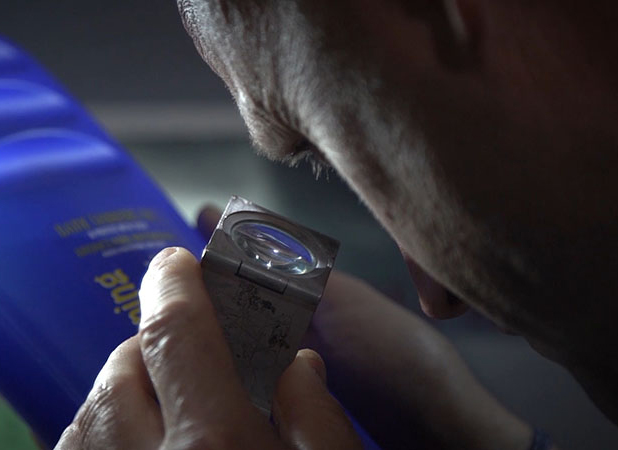
LabelPrint OÜ chooses Durst Tau RSCi for flexo switch to digital

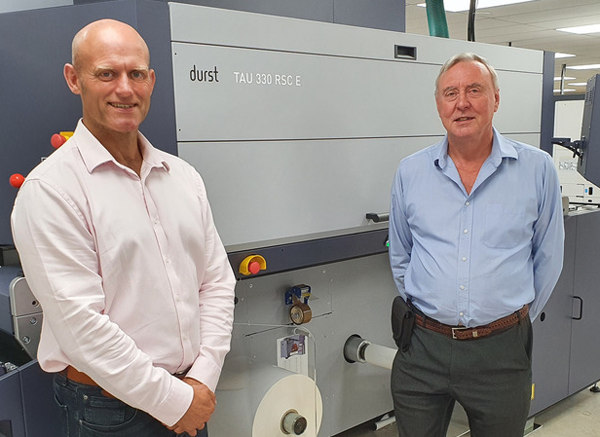
Durst has announced the official start of beta testing of its new Tau RSCi label press at label converter LabelPrint OÜ. The new single-pass UV inkjet label press, which was announced at Labelexpo Brussels last year, was installed at its headquarters in Tallinn, Estonia, in July 2020.

LabelPrint OÜ became a Durst Tau 330 customer already 5 years ago. Since then, they actively developed digital print services to its client base and a trustful relation has been built between Durst and LabelPrint OÜ during the past years. Therefore it was a logical step that Durst approached LabelPrint OÜ as the first-choice beta test candidate. After initial trials in late 2019, Sten Sarap, owner of LabelPrint OÜ, committed to be the beta test site for the new and revolutionary RSCi press. This was postponed for three months due to the Covid-19 lockdown.

The new Tau RSCi features print widths of 330, 420 or 508mm (13, 16.5 or 20 ins) and a higher printing speed of up to 100 linear m/min. New features for the RSC portfolio include a high opacity white print mode for an increased screen-like opacity and a high speed white mode that allows high speed printing at 80 lin. m/min of all colors, including white.

“This new press will mainly be used to transfer longer run flexo jobs onto a digital platform,” said Mr. Sarap. “It is too early to make big statements. However, we are very confident that this new press with its revolutionary print quality and high printing speed will help us to reduce production cost and improve lead times. And thanks to its amazing print quality it will help to innovate our business and make us more competitive.”

He added: “As a company that provides high quality sticker and print labels, the new Tau RSCi label press will be crucial in our mission to offer the shortest possible deadlines and competitive prices to meet customers’ individual requirements and needs.”

LabelPrint OÜs customer base includes beverage manufacturers, chemical and pharmaceutical industries as well as sectors. Formed almost 20 years ago, the company also has a sales office and warehouse at Tartu in the south of Estonia.

Helmuth Munter, Durst’s Segment Manager, Labels and Flexible Packaging, said: “We’re delighted to announce LabelPrint OÜ as the beta test site and wish them ongoing success. Labels continues to be a significant growth business for Durst, not least because increasing numbers of converters are recognizing the benefits of transferring more volume from flexo to our digital platform. The introduction of the Tau RSCi has generated a large amount of interest in the marketplace since it was launched in September.”

Read More

Η Labelart επιλέγει την GM NANO330 για το ψηφιακό φινίρισμα ετικετών

H εταιρεία PRINTPRESS έχοντας παρουσία πάνω από 20 χρόνια στον χώρο των γραφικών τεχνών με 2 μονάδες παραγωγής μια στην Αργολίδα και μια στην Αττική, εκτυπώνει για επαγγελματίες του χώρου του γραφικών τεχνών με συνέπεια, ποιότητα και τιμές χονδρικής, εκτυπώσεις offset, ψηφιακές, μεγάλου μεγέθους, ετικέτες σε ρολό, κατασκευάζει σταντ παρουσίασης και επιγραφές κάθε τύπου και παραδίδει καθημερινά τα προϊόντα της σε πελάτες/συνεργάτες σε όλη την Ελλάδα.


Η Printpress μένοντας πιστή στην στρατηγική της συνεχίζει να επενδύει πάνω στα πιο σύγχρονα μηχανήματα και να εφαρμόζει εξελιγμένες τεχνολογίες επιλέγοντας να πρωτοπορεί στον χώρο της, με γνώμονα πάντα τις ανάγκες του επαγγελματία. Η στρατηγική αυτή έχει βοηθήσει την εταιρία να αποτελεί ορόσημο στην Πελοπόννησο αλλά και να επεκτείνει σημαντικά το πελατολόγιο της, διαφοροποιούμενη από τις υπόλοιπες προτάσεις της αγοράς.


Στο παραπάνω πλαίσιο και έχοντας από νωρίς αναγνωρίσει τη σημαντική ανάγκη που έχει η αγορά για ετικέτες, η Printpress έχει προχωρήσει στη δημιουργία ανεξάρτητου τμήματος ετικέτας, με την εμπορική ονομασία «Labelart». Το τμήμα αυτό είναι μία πλήρως καθετοποιημένη μονάδα παραγωγής αποτελούμενη από 2 μηχανές εκτύπωσης, μία letterpress 5χρωμη UV και μία ψηφιακή πρέσα ρολού καθώς και αρκετά προεκτυπωτικά και μετεκτυπωτικά μηχανήματα για την διαμόρφωση της ετικέτας.


 Η ανάγκη για πιο άμεσες και γρήγορες παραγωγές τους κατηύθυνε στην επιλογή μιας ψηφιακής semi-rotary μηχανής για άμεσο τελικό προϊόν. Η επιλογή ήταν η DC330 NANO, επένδυση που σε σχέση με την ποιότητα παραγωγής αλλά και την ευκολία χρήσης την καθιστά μια από τις καλύτερες προτάσεις στον χώρο των μετεκτυπωτικών μηχανών τελικής διαμόρφωσης στις ετικέτες ρολού. Η Ελλάδα έχοντας πολλές μικρές βιοτεχνίες έχει ανάγκη από μικρές παραγωγές ετικέτας. Ταυτόχρονα η αύξηση της ζήτησης για προσωποποιημένο μάρκετινγκ παγκοσμίως καθιστά ακόμη πιο επιτακτική την ανάγκη εύκολης παραγωγής μικρού και μεσαίου τιράζ ετικετών, μια δυνατότητα στην οποία η DC330 NANO διακρίνεται.


Η υλοποίηση της επένδυσης έγινε σε συνεργασία με την εταιρία LINO, επίσημο Αντιπρόσωπο για Ελλάδα και Κύπρο της Grafisk Maskinfabrik.

Τα βασικά σημεία της μηχανής είναι η μεγιστοποίηση της σχέσης κόστους/κέρδους στις μικρές και μεσαίες παράγωγες. Επιπλέον χάρη στο ειδικό λογισμικό που τη συνοδεύει, δίνεται η δυνατότητα αλλαγής εργασιών και ευκολου setup μέσα σε 5 λεπτά. Τα βασικά χαρακτηριστικά της μηχανής είναι:

DC330 Nano – Ultra Compact Converting machine

Πλήρως ενσωματωμένη γραμμή τελειοποίησης ετικετών για ετικέτες.

Παρέχει περιστροφικό κοπτικό (die cutting), πλαστικοποίηση, web guide και κατά μήκος ρολοκοπή σε μια ευέλικτη πλατφόρμα.

  • Πλήρως σέρβο οδηγούμενη γραμμή παραγωγής με έλεγχο τάνυσης
  • 330 mm πλάτος ρολού, 72m/min (full rotary), 32 m/min (semi rotary)
  • Εύρος επανάληψης κοπτικού από 2”-22.5” σε ημικυλινδρική λειτουργία (semi-rotary mode, depends on tools)
  • Ενσωματωμένο Λογισμικό (Dispro software) για χρήση υπαρχόντων κοπτικών
  • Εγγυημένη τεχνολογία πάνω από 100 γραμμές τελειοποίησης στην αγορά από το 1998
  • Εκτός ή εντός γραμμής με ψηφιακή εκτυπωτική μηχανή.
  • Μοντέρνα κατασκευή πλαισίου μιας πλευράς για εύκολη χρήση και συντήρηση.
  • Ενσωματωμένη εκτύλιξη ρόλου (max roll diameter of 500mm. 3”/76mm air core.)
  • Ανατυλικτικό σκάρτου με κύλινδρο ξεγυμνώματος περιθωρίων
  • Μονό ανατυλικτικό με μέγιστη διάμετρο 400 mm με ανεξάρτητο έλεγχο τάνυσης.
  • BST ultrasonic οδηγό χάρτου και τραπέζι κόλλησης
  • Πλήρης έλεγχος μηχανής από ψηφιακό πάνελ με γραφικά
  • Μετρητής ετικετών και μέτρων

Ο κύριος Γιάννης Σούγλας ιδιοκτήτης της Printpress & Labelart, είπε για την επένδυση αυτή:  «Έπειτα από αρκετή έρευνα και αντίστοιχες προτάσεις επιλέξαμε την GM NANO 330 για να συμπληρώσει τις συνεχώς αυξανόμενες ανάγκες των υπαρχόντων και νέων πελατών μας για μικρές και άμεσες παραγωγές ετικέτας. Η εν λόγω μηχανή υπερτερεί σε σχέση με τον ανταγωνισμό σε ευκολία χειρισμού, ευελιξία αλλαγής εργασιών, ελάχιστα μέτρα σκάρτου υλικού, ειδικές εφαρμογές και φυσικά τεχνική υποστήριξη. Είναι μια μηχανή με πολύ καλή συνάρτηση κόστους κτήσης και δυνατοτήτων που μπορεί να σου προσφέρει.

 Η αγορά της έγινε μια περίοδο που οι ανάγκες για μικρότερα τιράζ και αμεσότητα τείνουν να γίνουν μονόδρομος, έτσι λοιπόν η επένδυση για εμάς ήταν επιτακτική ανάγκη για ποιοτικές και γρήγορες παραγωγές, οι οποίες σε συνδυασμό με την ψηφιακή πρέσα που διαθέτουμε στην οποία δεν απαιτούνται films, κλισέ και προεκτυπωτικές εργασίες, καταργούν τις παραδοσιακές μεθόδους οι οποίες είχαν κόστος και χρόνο. Έτσι λοιπόν σήμερα μπορούμε να παράγουμε μέσα σε λίγα λεπτά αρκετές χιλιάδες ετικέτες χωρίς πάγια έξοδα, με χαμηλότερο κόστος και να αποσταλούν ακόμα και αυθημερόν σε όλη την Ελλάδα!

Πέραν από τα πολλά πλεονεκτήματα που έχει η συγκεκριμένη μηχανή σε σχέση με τον ανταγωνισμό ένας βασικός παράγοντας επιλογής ήταν και το aftersale support που η LINO γνωρίζει καλύτερα από όλους. Επιλέγοντας την DC330NANO δεν προσθέτεις ακόμα μια μηχανή στο εξοπλισμό σου αλλά επιλέγεις ένα πακέτο υπηρεσιών, αναβαθμίσεων και υποστήριξης. Για εμάς η ομάδα της LINO είναι μέρος της οικογένειάς μας και βρίσκεται δίπλα μας σε αρκετά βήματα μας έως τώρα».


www.labelart.gr

Read More

Η Etiquetas Rospil επιλεγει παλι Durst Tau

Η Etiquetas Rospil έκανε το επόμενο βήμα στον ψηφιακό της μετασχηματισμό καταλαμβάνοντας νέες αγορές με μια επένδυση σε ένα Tau 330 RSC E από την Durst, κατασκευαστή προηγμένων τεχνολογιών ψηφιακής εκτύπωσης και παραγωγής.  Όλο και περισσότεροι πελάτες της Etiquetas Rospil  απαιτούν ρητά την παραγωγή των ετικετών τους στο inkjet πιεστήριο προηγμένης τεχνολογίας.

Η Etiquetas Rospil, με έδρα τη Μαδρίτη, σημείωσε ασταμάτητη ανάπτυξη λόγω της έντονης εστίασης στην πελατεία της και της δέσμευσής της προς την καινοτομία. Έγινε μια από τις πρώτες εταιρείες στην Ισπανία το 2013 που πραγματοποίησε επενδύσεις σε τεχνολογία ψηφιακού inkjet με λύσεις Durst Tau 330/200, οι ​​οποίες παρήγαγαν περισσότερα από 10 εκατομμύρια γραμμικά μέτρα. Η Etiquetas Rospil είναι πλέον η πρώτη εταιρεία στην Ιβηρική που εγκατέστησε το Durst Tau 330 RSC E. Η ψηφιακή αυτή λύση βελτιώνει την ευελιξία και παρέχει ταχύτερες ολοκληρώσεις των παραγγελιών μειώνοντας την πίεση στις απαιτήσεις παράδοσης. Αντικαθιστώντας το Tau 330, το μηχάνημα προσφέρει επίσης σημαντική εξοικονόμηση κατανάλωσης μελανιών ανά γραμμικό μέτρο.

Ο Jorge Pérez, Αναπληρωτής Διευθυντής της Etiquetas Rospil, η οποία φέτος γιορτάζει τα 45α γενέθλιά της, υπογραμμίζει επίσης τη συνέπεια του χρώματος και της φωτεινότητας των εκτυπώσεων που παράγονται στις λύσεις Tau. «Κάθε χρόνο υπάρχει ένας αυξανόμενος αριθμός πελατών που απαιτούν ρητά οι ετικέτες τους να παράγονται με την τεχνολογία Durst Tau», είπε. «Ή ανάπτυξη μας ήταν ασταμάτητη. Επίσης, για μας είναι σαφές ότι το μέλλον του τομέα είναι ψηφιακό. Αυτός ήταν ο λόγος που αποφασίσαμε να κάνουμε ένα νέο βήμα».

«Έχουμε πλήρη εμπιστοσύνη στην Durst. Η εμπειρία μας μαζί τους είναι μοναδική.  Δεν υπάρχει τίποτα συγκρίσιμο όσον αφορά την ποιότητα και την αξιοπιστία και, τώρα με το νέο Tau 330 RSC E, ούτε την παραγωγικότητα. Επιπλέον, η τεχνική βοήθεια που προσφέρει η Durst Ibérica είναι πλήρως εξατομικευμένη».

Το ψηφιακό, με μελάνια UV, inkjet πιεστήριο Tau 330 RSC E συνδυάζει την καλύτερη ποιότητα εκτύπωσης στην κατηγορία του με μια οικονομική επένδυση και είναι πλήρως αναβαθμίσιμο σε πιεστήριο 8 χρωμάτων για να παρέχει αυξημένη δυναμικότητα όταν αυξάνονται οι απαιτήσεις για μεγαλύτερη παραγωγή. Το πιεστήριο της Etiquetas Rospil είναι εξοπλισμένο με τέσσερα χρώματα συν λευκό.

Ο κ. Pérez είπε: «Γνωρίζουμε ότι το μέλλον είναι ψηφιακό και τα επόμενα χρόνια θα σημειώσουμε νέα πρόοδο. Αυτό είναι άλλο ένα πλεονέκτημα του Durst Tau 330 RSC E – επιτρέπει αναβαθμίσεις παραγωγικότητας έως και 80 γραμμικά μέτρα το λεπτό και πρόσθετα χρώματα που ταιριάζουν στις απαιτήσεις μας. Ωστόσο,  προς το παρόν είμαστε πολύ ευχαριστημένοι με την τρέχουσα επένδυση. Επιπλέον, ήδη κάνουμε συγκεκριμένα βήματα στον μετασχηματισμό για το Industry 4.0. Αυτή είναι η πρόκληση που πρέπει να αντιμετωπίσουμε τα επόμενα χρόνια και η ένωση των δυνάμεων με έναν εταίρο όπως η Durst σε αυτόν τον μετασχηματισμό, μας ενθαρρύνει να σημειώσουμε περαιτέρω πρόοδο».


Ο Helmuth Munter, Διευθυντής τμήματος της Durst, για Ετικέτες και Εύκαμπτη Συσκευασία (Labels & Flexible Packaging), δήλωσε: «Η ανάπτυξη της Etiquetas Rospil είναι ένα τέλειο παράδειγμα του πώς οι εταιρείες με προσανατολισμό προς την καινοτομία και το μέλλον αναγνωρίζουν τα γενικά οφέλη της τεχνολογίας μας. Είμαστε στην ευχάριστη θέση να ακούσουμε ότι οι πελάτες της απαιτούν ολοένα και περισσότερο οι παραγγελίες τους να παράγονται στην τεχνολογία μας. Η πλατφόρμα Tau RSC θέτει τη βάση για βιομηχανική εκτύπωση inkjet στη βιομηχανία των ετικετών. Προσφέρει ένα συνολικό πακέτο σε όλους τους πελάτες μας όσον αφορά την υψηλή ποιότητα, την καλύτερη δυνατή εξυπηρέτηση και την επακόλουθη αξιοπιστία παραγωγής καθώς και σημαντική εξοικονόμηση κόστους».

Read More

Increasing the Sustainability of the Textile Industry

“Sustainability” is the general principle of minimizing the use of resources in the course of, e.g., industrial processes by preserving the natural regeneration ability of the systems involved. In the context of the printing industry, the sustainable use of raw materials like inks, chemicals and substrates but also energy and water are of high relevance. Among the different application fields, especially the textile processing industry is considered as heavily resource consuming. As almost every step of the classical, analog textile production process is requiring high water amounts, the textile industry has one of the most extensive water footprints of any industry sector and, generally speaking, high energy requirements.1

Focusing on the printing step itself, analog textile printing techniques generate high amounts of ink wastage, require the preparation, cleaning and storage of screens, do not permit short production runs and utilize high water amounts. For example, the water usage for rotary screen printing is in the region of 50-60 liters of water per meter of printed product. In contrast, digital textile printing technologies are far more sustainable than analog alternatives and pave the way towards a cleaner, more efficient and more profitable textile production approach: no ink is wasted in screens but also the water consumption is much lower. According to different market studies and by not requiring water for cleaning of the screens, pipes and rollers,2 digital textile printing saved more than 40 billion liters of water usage in the worldwide textile industry in 2018.3 The sustainable character of digital textile printing can even be further increased by using Durst Alpha Pigment Ink, which allows digital textile printing on various substrates in a one-step process avoiding complex and resource consuming pre- and posttreatment steps. Full color fastness is achieved by pure heat fixation without lengthy steam fixation or washing processes.

The textile industry has one of the most extensive water footprints of any industry sector. Converting to digital textile printing will improve the sustainability of the textile industry and will be beneficial for the environment. Durst is fully committed to providing sustainable production technologies to our customers and with the Alpha Series we have an adequate offer for improving the sustainability of the textile industry.


https://www.kennstdueinen.de/magazin/nachhaltiger-textildruck-die-umwelt-und-hautfreundlichsten-methoden/
https://www.heimtextil-blog.com/teil-1-der-digitale-textildruck-klasse-fuer-die-masse/
https://www.fespa.com/en/news-media/features/sustainability-is-the-paradigm-of-digital-textile-printing

Read More

Tasmania’s Road Signs are printed with the traffic sign printer from Durst

Eye Spy Signs, Cambridge, Tasmania, Australia

Durst Rho 163 TS in production at Eye Spy Signs

Eye Spy Signs strengthens its position as industry leader with installation of Durst Rho 163 TS printer.

Eye Spy Signs started out in a suburban home garage in Hobart (Tasmania – Australia) back in 1994 eking out an existence as a dedicated Real Estate sign provider. In 1996 the Company bought the Government’s Main Roads sign workshop at tender and all of a sudden became heavily involved in road sign manufacture for the State of Tasmania.

For the next 20 years, our road signs were made using conventional methods – screen printing or cut vinyl – both high in labour content and inherently inefficient. In the meantime, the development of digital printing processes – and in particular ink technology (in conjunction with 3M) was progressing at a quick pace.

In March 2017, Eye Spy took delivery of a Durst Rho 163 TS and all of a sudden, another world opened up. It quickly re-affirmed our position as industry leader. As well as conventional roll-to-roll printing, it offered many side benefits including the ability to print flat substrates. For example, we very frequently print jobs direct to corflute requiring no over laminate. These days we put many different types of substrates through the machine – it is so versatile.

Year on year, our turnover has increased whilst our labour levels have decreased.

Running costs are surprisingly low and the reliability of the machine is nothing short of incredible – we have experienced machine availability exceeding 99% since it was commissioned. When needed, support from Durst has been outstanding and the fact that we are in different hemispheres/time zones has made little difference.

John Howard B.Eng (Hons), Managing Director, EYE SPY SIGNS P/L says: “In summary the acquisition of the machine is the best business decision that EYE SPY has ever made. It was not cheap, but what do you expect to pay if you are buying the best in the world?”

Tasmania’s Road Signs are printed with the traffic sign printer from Durst

Read More

Rondo, St Ruprecht an der Raab, Austria

We didn’t just buy a machine, we bought a whole system involving software, analytical tools and calculation tools, so we are very happy that we don’t need any additional software

Rondo’s digital transformation for its corrugated packaging business has been driven by brands who have opened their minds to the new wave of opportunities from sustainable production where flexibility and time to market are crucial driving factors.

Digital corrugated production is now going up by 25-30% a year for Austria-based Rondo St Ruprecht an der Raab, one of six plants in Europe for the family-owned Rondo Ganahl Group. The company specializes in corrugated board production using flexo, offset and digital technologies. It has never looked back since making a leap of faith two years ago and becoming one of the world’s first users of the Durst SPC 130 water-based technology.

Managing all data through the Durst workflow with its sophisticated color management, analytical tools and variable data creation, has made a strong and positive difference – all provided through Durst Professional Services.

Robert Posch, Operations Manager at Rondo St Ruprecht an der Raab, said: “We didn’t just buy a machine, we bought a whole system involving software, analytical tools and., calculation tools, so we are very happy that we don’t need any additional software. The brand Lindt & Sprüngli, as an example, has extremely dark and powerful red colours, as well as brown. With the powerful Color management features, we have been able to reproduce them accurately and we have matched their demands.”

Mr Posch added: “We are looking forward to working with Koenig & Bauer and Durst together because we see huge future potential with the software and what we hope will be the perfect printing machine. With experience of big industry, both Durst and Koenig & Bauer are excellent, robust engineering companies with world-class expertise. Certainly, we have had a very positive impression of the SPC 130 machine and from the staff right from the start.”

Karl Pucher has been the Managing Director at for Rondo St Ruprecht an der Raab for the last eight years. “We had been talking about getting into digital printing for a long time and for Rondo it was something new,” he said. “We had to change a lot of processes and took a lot of risk. We have made a lot of improvements in the processes. Sales are now racing ahead every month. Customers are making repeat orders, which is very important, so we are very happy that we took this decision. Our corrugated business is going up by around 20 to 30% every year and we see that this is a fast-growing business for the next years and soon we plan to go for a full three-shift operation. The share of digital printing was at first around 5 to 10% of our overall business, but we expect this to double within the next couple of years.

“It’s a known fact that brand owners were in love with the offset printing because of the quality, but since we have had digital printing we have transferred lot of offset business to digital because of shorter lead times, initiation costs and there is no difference in quality between offset and digital for many applications. Quality is extremely important for the brand owners, but it is not the topic anymore.

About 90% of the Rondo digital printing business is for the food industry. Brand owners have many more products compared to a few years ago and shorter lead times to market. “Lindt & Sprüngli is one example where we used to plan months ahead for Christmas, Easter and summer editions and needed to keep high levels of stock,” said Mr Pucher. “Now with digital technology we can be extremely flexible. Lindt & Sprüngli can create a new order that we can produce digitally and have in the shops within weeks.”

Mr Pucher added: “Digital printing is also providing answers for the global debate on the use of plastic packaging, which obviously extends to food and safety. Using the new food safety compliant inks in primary and secondary packaging means we can create corrugated board packaging to be used as an environmentally friendly alternative to plastic. The SPC 130 with its water-based technology from Durst is providing the solutions that we need to delivery to the food industry.”

Read More

Rospil’s total confidence in Durst leads to Tau 330 RSC E investment to capture new markets

Madrid, Spain – 12.06.2020: Etiquetas Rospil has taken the next step on its digital transformation by capturing new markets with an investment in a Tau 330 RSC E from Durst, manufacturer of advanced digital printing and production technologies. Increasing numbers of its own customers are explicitly demanding that their labels are produced on the single-pass inkjet press.

Madrid-based Etiquetas Rospil has enjoyed unstoppable growth due to its strong customer focus and commitment to innovation. It became one of the first companies in Spain in 2013 to invest in digital ink-jet technology with Durst’s Tau 330/200 solutions, which produced more than 10 million linear meters. Etiquetas Rospil has now become the first company in Iberia to install the Durst Tau 330 RSC E. It improves versatility and provides faster order turnarounds to ease pressure on delivery requirements. Replacing the Tau 330, the machine also allows considerable ink consumption savings per linear meter.

Jorge Pérez, Deputy Manager of Etiquetas Rospil, which is celebrating its 45th birthday, also highlights the consistency of the color and brightness of the orders produced on the Tau Solutions. “Each year there are an increasing number of customers who demand explicitly that their labels are produced with Durst Tau technology,” he said. “It’s been unstoppable growth. Also, we are clear that the future of the sector is digital. That is why we decided to take a new step.


“We have full confidence in Durst. Our experience with them has been second to none. There is nothing comparable in terms of quality and reliability and, now with the new Tau 330 RSC E, neither in productivity. Furthermore, the technical assistance offered by Durst Ibérica is fully personalized.”

The Tau 330 RSC E combines best-in-class print quality with an economic investment and is fully upgradeable to an 8-color label press to provide increased capacity when production requirements increase. Etiquetas Rospil’s model is equipped with four colors plus white.

Mr Pérez said: “We know the future is digital and we will make new progress in the coming years. This is another advantage of the the Durst Tau 330 RSC E – it allows upgrades of productivity up to 80 linear meters a minute and add process colors to match our requirements. However, for now we are very happy with the current investment. In addition, we are already taking concrete steps in the Industry 4.0 transformation. This is the challenge we have to face in the coming years and by joining forces with a partner such as Durst in this transformation, we are encouraged to make further progress.”

Helmuth Munter, Durst’s Segment Manager, Labels and Flexible Packaging, said: “Etiquetas Rospil’s growth is a perfect example of how innovative and forward-thinking companies recognize the all-round benefits of our technology. We’re delighted to hear that its customers increasingly demand that their orders are produced on the technology. Our Tau RSC platform sets the base for industrial inkjet printing in the label industry. It offers a total package to all our customers in terms of high quality, the best possible service and resulting production reliability, as well as important cost-savings.”

Read More

How metal additive manufacturing will alter the automotive industry

In a recent interview with Jonah Myerberg, co-founder and CTO of Desktop Metal, we explored how metal additive manufacturing, including desktop printers, will affect automotive design and production.

Desktop Metal printers are used in a number of industries, with automotive one of the major ones. Ford and BMW were early adopters of Desktop Metal’s technology and have become investors. Mostly, these companies are using metal 3D printing in vehicle short runs but they have ambitions to move into mass production.

Here are some of Myerberg’s observations about the use of metal 3D printing in the automotive industry.

–AM is going to be both a tool and a game-changer. It’s a tool because it will be required to do a vehicle design job efficiently and competitively. Designers will need 3D printing in one way or another to be able to react quickly to customers and their demands, prototyping components and parts to change and innovate, as well as to produce low volume components, and to remain flexible for their customers.

–It will be a game-changer because it will enable specific needs for products like the electric vehicle for lightweighting.

–It’s also going to be a game-changer in that it will help equalize the field for small companies trying to compete with the big companies. The automotive industry will see a birth of new tier-one suppliers focused on AM. And it’s going to change the way that designers think about automotive design.

–Metal AM can be applied to any component within a car. Materials are available that tolerate the temperatures and offer the strengths of more traditional alloys used in the engines and suspension systems and transmissions. “We’re going to see additive manufacturing playing in every aspect of a vehicle,” noted Myerberg.

–The Circular Car Initiative. One focus of the world economic forum is how to make transportation systems more efficient and less impactful on the environment. Electric vehicles, hybrid vehicles, and hydrogen vehicles will play on that. But what’s not often thought about is the impact that the actual car itself will have once it’s reached its end of life. “All of the things done to make the car more efficient, such as low weight plastics, could become a problem. What do you do with those light weight plastic components at the end of a car’s life? You can’t melt them down and turn them back into plastic again,” he noted.


Metals can be almost endlessly recycled. The circular vehicle initiative is looking for answers and looking for ways to make vehicles fully recyclable. Some parts can be repurposed. Battery packs in electric vehicles reach a point where they are not useful in the vehicle, but they still have energy in them. Some are being used on the electric grid and will work for another 10 or 15 years. “This type of creative thinking is extending the lives of the automotive components, reducing the impact that the vehicle has on the environment after its death.,” noted Myerberg. “We’re going to see plastic components being replaced by metal components for that reason.”

Many of the complex assemblies inside a vehicle are assemblies of composites of polymers, or metal components buried within the polymer composites. “These complicated assemblies are ripe for that type of additive manufacturing that can step in, combine three, four, five, 10 parts into one and replace an entire system with single or multiple components that weigh the same or less, take up less space, and are fully recyclable. Also, such parts often require the use of injection molding machines to produce, which can be a huge investment on the part of the OEM or the tier one molder, especially if changes are involved,” said Myerberg.

For the engine compartment, now there are high strength, high-temperature polymers available. But metal materials offer higher ranges. Replacing plastic components with metal ones lets designers raise localized temperatures. Some vendors are looking into using metal to protect components or be combined with plastic components.

–One of the limitations of most 3D printers is the build size. “I’d love to say we can print a car chassis or body because these are hugely complicated assemblies that are very much static assemblies designed for crash and stability and stiffness, but with no moving parts, welded together. It would be fantastic to optimize a body into a single piece and print it. We’re not there, but we are certainly working on technologies that will get us there if that’s the end game. We want to see these parts grow out of the 3D printer in real size and real and in a single form.”

–Several 3D printers let designers place mechanical characteristics exactly where they want them. For example, one area can be flexible and a different area can be stiff. That opens up possibilities for engineers, enabling them to design a chassis as much for performance on the road as for manufacturability.

“To be able to design an entire vehicle at one time and then print it out and have it be optimized for crashing, impact, suspension, performance all in one, that’s really exciting, but we’re certainly not there yet. In fact, we’re up against current manufacturing processes focused around sheet metal. Products that require parameters like width, flatness, and low profile (for stamping) are not the easiest things to 3D print in metal. Sheet metal is not a friendly design and so designers, if they’re going to replace a sheet metal fabricated assembly with a 3D printed part, they will have to go back to the drawing board and redesign it under the loads that are being placed on it.”

One of the tools that will help such a redesign is generative design, because it uses AI to do the heavy lifting.

–Additive manufacturing is a bridge between concept and final mass production. “And we’re seeing that happen all over the place where some customers or some designers, they don’t have the time or they don’t have the money to invest in the tooling that’s required for the part, while 3D printing allows them to do that, they allow them to jump in and test a design without having to invest in that tooling.

–More than ever, additive manufacturing is affecting the supply chain, which will affect worldwide manufacturing. “We’ll be able to pull manufacturing back in, re-shore it into the United States, bring it closer to the point of manufacturing instead of have these long-distance supply chains.”

Read More

PostProcess Live Solution Experience

Sign up today for a PostProcess Live Solution Experience, a real-time group tour of automated 3D post-printing focused on key print technology applications. Conducted by an expert Engineer broadcasting from our lab, you will get a close-up view of how full-stack technology encompassing software, hardware, and chemistry works. See the solutions running live on the proprietary AUTOMAT3D™ platform and engage in real-time Q&A. Explore options for various sessions below! 

FDM & PolyJet


Your live tour of automated Support Removal and Surface Finishing for FDM & PolyJet

June 11th

June 18th

June 25th

Sign up now!

Resin Removal


Your live tour of revolutionary Resin Removal technology for SLA, DLP, CLIP and more

June 11th

June 18th

June 25th

Sign up now!

Read More

EnvisionTEC | 3D Printed Test Swab Production

EnvisionTEC is fulfilling orders for 3D Printed NP swabs for Covid 19 testing. During the clinical trials performed by BIDMC, the EnvisionTEC swabs received positive comments from study staff for comfort, flexibility, and ease of insertion.

Learn More
envisiontec.com/envisiontec-covid-19-efforts/

EnvisionTEC COVID-19 Efforts

Lorem ipsum dolor sit amet, consectetur adipiscing elit. Ut elit tellus, luctus nec ullamcorper mattis, pulvinar dapibus leo.

The 2020 COVID-19 pandemic has proven to be an opportunity for 3D printing to assist in finding new, innovative ways for healthcare professionals to provide assistance.  A shortage of the necessary diagnostic and treatment supplies has been discovered, and while many businesses have jumped in to help, it is 3D printing that may be able to provide real answers for how to combat the supply chain crisis.

Working hand-in-hand with healthcare leaders, EnvisionTEC has identified several areas where their specific strengths in biocompatible materials and fast, precise 3D printing equipment can help to provide replenishment of stocks as well as new, alternative solutions.


Learn more about these efforts below and find out where you can help, and how we can help you.

Latest Press Releases:

April 20, 2020 – BIDMC-led clinical trial identifies four novel 3D-printed swabs for use in COVID-19 testing – Link

April 15, 2020 -EnvisionTEC to 3D Print Mass Quantities of Nasopharyngeal Swabs for COVID-19 Testing Based on Successful Clinical Trial – Link

March 29, 2020 – EnvisionTEC Partners With Healthcare Community to Battle Global Pandemic – Link

Read More