Wagner Labels makes “substantial investment” in Durst solutions

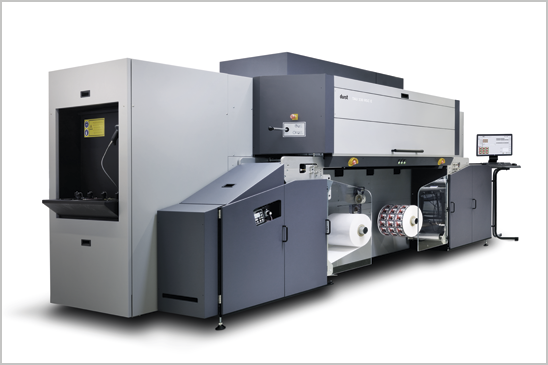
Aussie labelling company, Wagner Labels, has purchased the Durst Tau 330 RSC E and its converting equipment in a “substantial investment” worth well over $1 million.

The investment makes Wagner Labels a new customer for Durst and is the first Tau RSC E installation in Australasia.

Durst Pacific labels and package printing sales manager Paul Sanelli told Sprinter that Wagner Labels made this “substantial investment” in converting equipment, flexo and digital press to improve its business operations.

“The main agenda for Wagner Labels was to increase the capacity of its digital offering and to expand into new markets,” he said.

“For us, as a company, it means that we’ve secured another important client – someone that is established and has been in business for more than 80 years. From a Durst perspective, we know that he’s thorough in his assessment of solutions in the market but chose the Tau as the product to take his business to the next level.

“It’s also an acknowledgement by a well-respected label house that Durst’s pre-sales, sales and post-sales structure has met the requirements of the business.”

Sanelli also mentioned that the Tau is a fully scalable system, enabling Wagner Labels to upgrade the solution in width, colours and speed without a forklift.

“So, for on the field upgrades, if they have a capacity issue, they can upgrade the Tau instead of running a second shift or having to purchase a separate unit. They’ll get a 40 per cent productivity increase just by scaling the system,” he said.

Wagner Labels managing director John Galea said the features of the Tau impressed him and was the reason behind the purchase.

“We were looking for speed and quality, and we felt that with the options out there that the Tau provided the best solution. Its resolution – 1200 by 1200 dpi – is probably one of the best in the market now,” he said.

“We have been dominating as a label printer and have been looking into moving into the packaging space, so the Tau gears us up for that space. The purchase was for expansion, not replacement, so it complements the other solutions that we use.”

Read More

Η GS Labelprint επιλεγει την GM DC330MINIflex


Η εταιρία GS Labelprint με έδρα το Καματερό  δραστηριοποιείται στην ετικετοποιία και στην εκτύπωση αυτοκόλλητων ετικετών και υλικών συσκευασίας (χονδρική, λιανική, εξαγωγές).

Από την ίδρυσή το 2014, με εμπειρία από τον χώρο της εκτύπωσης πλέον των 33 ετών, η στρατηγική επιλογή της ήταν η επένδυση σε εξοπλισμό παραγωγής τελευταίας τεχνολογίας.
Η επιλογή έγινε για να ανταποκριθεί με τον καλύτερο τρόπο η ανοδική τάση της αγοράς για ποιοτικά προϊόντα σε ανταγωνιστικές τιμές, αλλά και για εργασίες μικρών ποσοτήτων, με γρήγορους χρόνους εναλλαγής εργασιών κι χρόνους παράδοσης.

Διαθέτοντας μονάδες ψηφιακής εκτύπωσης ετικετών σε ρολό παράγει προϊόντα φιλικά προς το περιβάλλον, ακόμη και πιστοποιημένα για επαφή με τρόφιμα, εκτυπώνοντας σε μια πολύ μεγάλη γκάμα πρώτων υλών όπως Χαρτί, PE, PP, BOPP, OPP, PET, POLYESTER, PVC, VINYL, χαρτόνι κ.α.

Για να συνεχίσει την ταχύτατη εξυπηρέτηση των πελατών της πρόσφατα η GS Labelprint πρόσφατα προχώρησε σε επένδυση μιας λύσης για φινίρισμα ετικετών σε ρολό, της μηχανής DC330 MINIflex της εταιρείας Grafisk Maskinfabrik (GM) από την Δανία.

H DC330 MINIflex είναι μηχανή φινιρίσματος ετικετών ρολού με μικρό όγκο και πλήρη χαρακτηριστικά. Γρήγορη, ευέλικτη και ταυτόχρονα οικονομική γραμμή φινιρίσματος με τις έξυπνες βασικές επιλογές, όπως ο σταθμός αυτόματης ρολοκοπής της GM και η ημιαυτόματη εναλλαγή στην ανατύλιξη ρολών ετικετών.

 Η MINIflex είναι έτοιμη για λειτουργία είτε ως ανεξάρτητη είτε σε σειρά (in-line) με όλα τα μεγάλα ψηφιακά πιεστήρια.

Η DC330MINIflex έχει όλα όσα χρειάζεστε για να τελειοποιήσετε ετικέτες. Βερνίκι, ημι-περιστροφική κοπή ετικετών, σχίσιμο ρολού και διπλή επανατύλιξη. Προαιρετικά τοπικό βερνίκι, ψυχρή θερμοτυπία, πλαστικοποίηση, ενδιάμεση σύνδεση, κορώνα, καθαρισμό ρολού, οπίσθια κοπή περιθωρίων, ρολοσχιστικά μαχαίρια και άλλα. Όταν χρησιμοποιείται μαζί με ένα ψηφιακό πιεστήριο ετικετών, αυτή η πρωτοποριακή μονάδα παρέχει στους επαγγελματίες εκτυπωτές ετικετών μια πλήρη και ευπροσάρμοστη λύση για ψηφιακή εκτύπωση μεγάλου όγκου.

Η μηχανή διαθέτει:

    • Σύγχρονη πλατφόρμα που εξασφαλίζει τη γρήγορη εγκατάσταση του σταθμού κοπής με σύμπτωση και υψηλού επιπέδου σταθερότητα
    • Ψηφιακό πάνελ χειρισμού με γραφική αναπαράσταση του μηχανήματος όπως έχει εγκατασταθεί
    • Σταθμό αυτόματης προετοιμασίας θέσεων ρολοσχιστικών μαχαιρών
    • Προηγμένους βραχίονες συγκράτησης για γρήγορη αλλαγή σε ρολό
    • Υψηλή απόδοση – ημι-περιστροφική κοπή έως 65m / min, πλήρως περιστροφική έως 72m
    • Πλήρως προσαρμόσιμη για εξειδικευμένες ανάγκες
    • Ενσωματωμένες επιλογές για οποιοδήποτε ψηφιακό πιεστήριο
    • Ηλεκτρονική Υποστήριξη – εύκολη πρόσβαση στο Διαδίκτυο και συντήρηση
Read More

Η “The Label Makers” ΚΕΡΔΙΣΕ ΔΥΟ ΦΟΡΕΣ ΜΕ ΤΗΝ ΛΥΣΗ “Diablesse” ΓΙΑ ΕΤΙΚΕΤΑ

Μια περίπλοκη εικονογράφηση για το επώνυμο ρούμι Diablesse αποδόθηκε πιστά μέσω εξωραϊσμού και εκτύπωσης από ένα κορυφαίο κατασκευαστή ετικετών, την εταιρεία The Label Makers. Το αποτέλεσμα είναι μία εντυπωσιακή ξεχωριστή συσκευασία που  βραβεύτηκε τόσο ως «Ετικέτα της χρονιάς» στα πρόσφατα Βραβεία Συσκευασίας του Ηνωμένου Βασιλείου όσο και στην κατηγορία «Ειδικά εφέ σε ετικέτες και συσκευασίες» στα Βραβεία Digital Printer Awards 2019.

Το ρούμι παράγεται από το ανεξάρτητο αποστακτήριο  του Manchester, την εταιρεία Farman & Son, και περιλαμβάνει δύο εκφράσεις – το Diablesse Caribbean Rum και το Diablesse Clementine Spiced Rum. Η ετικέτα, που σχεδιάστηκε από το διαφημιστικό γραφείο του Leeds «Made by Analogue», αναφέρει την ιστορία του «Diablesse», ενός πειρασμού από την λαϊκή τέχνη της Καραϊβικής  που φαίνεται όμορφη και σαγηνευτική, αλλά κάτω από την ομορφιά βρίσκεται μια σκοτεινή και διαβολική γυναίκα που αιχμαλωτίζει τις καρδιές και το πνεύμα των ανυποψίαστων εραστών της.

Σύμφωνα με τη μυθολογία, η οδηγία για την ετικέτα ήταν να προσελκύσει και να παρασύρει  τον καταναλωτή σε έναν κόσμο μυστηρίου και ίντριγκας, όπου δεν υπάρχει άλλη επιλογή από το να αγοράσει το ρούμι και να πιεί μια γουλιά. Ο χαρακτήρας της έρχεται στη ζωή μέσω μιας πλούσιας επεξηγηματικής προσέγγισης και τονίζεται με μια επιμελή χρήση πολυτελών χρυσών φύλλων για να αντιπροσωπεύει το βάθος του μείγματος στο ίδιο το ρούμι.


Εκτυπωμένη με μεγάλη προσοχή στη λεπτομέρεια, η ετικέτα καταγράφει τις ιδιαίτερες πολυπλοκότητες της εικονογράφησης και συμπληρώνεται από τις επικαλύψεις των ανάγλυφων ματ-χρυσών μεμβρανών και των αξιόλογων λεπτομερειών. Η The Label Makers χρησιμοποίησε το υλικό FSC Fasson Matt Wine FSC, εκτυπώνοντας ψηφιακά με 8 χρώματα στο Durst Tau RSC και στη συνέχεια εφάρμοσε θερμή χρυσοτυπία με μια πολυεπίπεδη ορειχάλκινη μήτρα και διακόσμησε την ετικέτα περαιτέρω με λεπτή αναγλυφοτυπία.

 «Οι The Label Makers έκαναν μια θαυμάσια δουλειά για να φέρουν την ετικέτα από το σχεδιασμό στη ζωή και από το αρχικό όραμά μου εκπλήρωσαν πλήρως αυτό που ήλπιζα ότι θα μπορούσε να επιτευχθεί. Για το έργο χρειάστηκε αρκετός χρόνος καθώς και προσοχή ώστε να ολοκληρωθεί σωστά. Αυτό δεν εκπλήσσει με ορισμένες προκλήσεις εξωραϊσμού, όπως την υψηλής ποιότητας  θερμοτυπία και την κάλυψη που απαιτήθηκε. Έχω εντυπωσιαστεί από την τελική ετικέτα και δεν θα διστάσω να συνεργαστώ με την The Label Makers  για την επόμενη δουλειά μου», δήλωσε ο ιδρυτής Cleo Farman.

Ο David Webster, διευθύνων σύμβουλος της The Label Makers, πρόσθεσε: «Σκοπός της ετικέτας ήταν να πει την ιστορία της μάρκας και να δημιουργήσει μια στενή αλληλεπίδραση με τους καταναλωτές. Αυτό επιτεύχθηκε μέσω της επιμελούς αναπαραγωγής των ιδιαίτερων  λεπτομερειών της απεικόνισης και της ελεύθερης χρήσης του ματ χρυσού, για να συλλάβει την ουσία της ίντριγκας και του μυστηρίου. Είμαστε ευχαριστημένοι με τον τρόπο με τον οποίο η ετικέτα έχει γίνει αποδεκτή μέχρι σήμερα.

Source: The Label Makers

Read More

Lino & GM – Grafisk Maskinfabrik: ΕΤΑΙΡΙΚΗ ΣΥΜΦΩΝΙΑ


Η LINO, η κορυφαία εταιρία στην Ελλάδα, που δραστηριοποιείται στον κόσμο της 2D & 3D εκτύπωσης  με την ολοκλήρωση συστημάτων (με την Lino3D, μέλος του ομίλου), ανακοινώνει τη νέα εταιρική συμφωνία και συνεργασία με την εταιρεία  Grafisk Maskinfabrik (GM) για τις πωλήσεις και την υποστήριξη των λύσεων φινιρίσματος (τελειοποίησης) της Grafisk Maskinfabrik για την βιομηχανία ετικετών στην περιοχή.

Η Grafisk Maskinfabrik, κοινώς γνωστή ως GM, παρέχει λύσεις φινιρίσματος για τη βιομηχανία ετικετών για τέσσερις δεκαετίες. Η GM είναι μια οικογενειακή επιχείρηση, βασισμένη στις παραδοσιακές αξίες της δανέζικης σχεδίασης και  στιβαρής κατασκευής, με ακρογωνιαίο λίθο την 40χρονη εμπειρία στην παροχή λύσεων για πελάτες στην βιομηχανία ετικετών παγκοσμίως. Η εταιρεία εδραιώνεται με γνώση και κατανόηση της γραφιστικής δραστηριότητας και συνεχώς εργάζεται προς την κατεύθυνση του “Making Converting Easy” (Κάνοντας το φινίρισμα εύκολο).

Παρόλο που η GM είναι παγκόσμιος παράγοντας στην αγορά ετικετών με αντιπροσώπους παγκοσμίως και γραφεία στη Δανία, το Ηνωμένο Βασίλειο, την Ιταλία, τις ΗΠΑ και τη Χιλή, όλα τα μηχανήματα αναπτύσσονται, σχεδιάζονται, παράγονται και συναρμολογούνται  στη μικρή πόλη Birkerod λίγο έξω από την Κοπεγχάγη. Το νέο ολοκαίνουργιο εργοστάσιο της GM, διπλάσιο σε μέγεθος, θα είναι έτοιμο την άνοιξη και θα βοηθήσει την εταιρεία GM να φτάσει σε νέα επίπεδα παραγωγής, παραγωγικής ικανότητας, ευελιξίας και υποστήριξης.

Η Lino A.E.B.E. αναπτύσσει και διανέμει ολοκληρωμένες λύσεις εκτύπωσης δύο και τριών διαστάσεων, οι οποίες αποτελούνται από εξοπλισμό, εφαρμογές, αναλώσιμα και υπηρεσίες για επαγγελματίες στην αγορά έντυπων επικοινωνιών, με έμφαση στις καινοτόμες τεχνολογίες ψηφιακής εκτύπωσης και συστήματα φινιρίσματος. Η εταιρεία δραστηριοποιείται στην περιοχή της Νοτιοανατολικής Ευρώπης.

Ο κ. Χρήστος Αναστασίου, Πρόεδρος του Διοικητικού Συμβουλίου του LinoGroup, δήλωσε: «Η LINO με υπερηφάνεια ανακοινώνει τη συνεργασία της με την Grafisk Maskinfabrik για την διανομή στην περιοχή μας καινοτόμων λύσεων όπως inline (σε σειρά) τελειοποίηση, εξαιρετικά αξιόπιστα και παραγωγικά μηχανήματα φινιρίσματος και λύσεις φινιρίσματος για τις νέες αγορές στην αγορά ετικετών και συσκευασιών».

Η GM παρέχει προηγμένες λύσεις φινιρίσματος για τη βιομηχανία αυτοκόλλητων ετικετών. Η GM κατασκευάζει και σχεδιάζει μια μεγάλη σειρά μηχανών, που περιλαμβάνουν πλήρεις γραμμές τελειοποίησης, κοπής λέιζερ, κοπτικών με καλούπια, θερμοτυπίας, μεταξοτυπίας, πλαστικοποιητών, ρολοκοπής με επανατύλιξη, συστημάτων ανύψωσης ρολών, μηχανών κοπής φύλλων και κάθετης κοπής ρολών σε μικρότερα ρολά.

Το βασικό προϊόν και η ναυαρχίδα της εταιρείας είναι η πλατφόρμα DC, ένα σύστημα φινιρίσματος που διατίθεται σε τέσσερα μεγέθη, με τεράστιο αριθμό επιλογών και μπορεί να λειτουργεί είτε σε σειρά είτε offline με το πιεστήριο της επιλογής σας.

Η GM θα συμμετάσχει στην έκθεση Drupa με δικό της περίπτερο. Όμως ο εξοπλισμός της GM θα παρουσιασθεί επίσης και σε πολλά άλλα περίπτερα. Για περισσότερες πληροφορίες, παρακαλούμε επικοινωνήστε με: labels@lino.gr

Read More

2η Durst RSC-E LM ΓΙΑ ΤΗΝ ΕΤΑΙΡΕΙΑ ΧΑΙΤΟΓΛΟΥ

Σε νέα επένδυση στον τομέα της ψηφιακής εκτύπωσης ετικετών προχώρησε η εταιρεία Χαΐτογλου Α.Ε. Γραφικών Τεχνών.  

Το 2018 η Χαΐτογλου Α.Ε. Γραφικών Τεχνών επένδυσε στον UV inkjet εκτυπωτή ετικετών και συσκευασίας Durst Tau 330LM και δύο χρόνια μετά αποφάσισε να προχωρήσει σε 2η επένδυση στον νέο Durst Tau RSC E 330LM με το λογισμικό Durst Workflow.

Στις εγκαταστάσεις της εταιρείας στο Καλοχώρι Θεσσαλονίκης, σε έκταση 2.500 τ.μ. στεγάζονται όλα τα τμήματα που εμπλέκονται στην παραγωγική διαδικασία. Το 2018, στα πλαίσια του εκσυγχρονισμού του εξοπλισμού της, η Χαΐτογλου Α.Ε. Γραφικών Τεχνών, εγκαινίασε νέα μονάδα ψηφιακής εκτύπωσης σε νέο κτίριο. 

Σήμερα αποτελεί μια καθαρά καθετοποιημένη μονάδα όπου η άριστη και άμεση συνεργασία μεταξύ προεκτύπωσης, παραγωγής και λοιπών τμημάτων επιτρέπει την προσφορά υπηρεσιών υψηλών προδιαγραφών, από την πρώτη επαφή με τον πελάτη καθώς και μετά την παράδοση του τελικού προϊόντος.

Η κυρία Ντενίζ Χαΐτογλου δήλωσε σχετικά με την νέα επένδυση: «Στην έκθεση Labelexpo 2019 είδαμε τις νέες διευρυμένες δυνατότητες του εκτυπωτή Durst Tau RSC E 330LM και αποφασίσαμε ότι είναι η κατάλληλη μηχανή για την εξέλιξη της παραγωγής μας».  

Το σύστημα εκτύπωσης ετικετών Durst Tau RSC E 330LM παρουσιάστηκε για πρώτη φορά στη έκθεση Labelexpo 2019 στις Βρυξέλες, όπου λειτούργησε καθόλη τη διάρκεια με τα νέα βελτιωμένα UV μελάνια χαμηλής μετανάστευσης (Low Migration), συγκεντρώνοντας το ενδιαφέρον των επισκεπτών.  

Το σύστημα UV inkjet Durst Tau 330 RSC E συνδυάζει τη βιομηχανική παραγωγικότητα με την ασύγκριτη ποιότητα εκτύπωσης  και την αποτελεσματικότητα. Το πιεστήριο χρησιμοποιεί την τεχνολογία αιχμής Durst RSC. Η ανάλυση των κεφαλών εκτύπωσης 1200 x 1200 dpi σε συνδυασμό με το μικρότερο μέγεθος σταγόνας των 2pl παρέχει ποιότητα εκτύπωσης παρόμοια με φωτογραφική, αποδίδοντας λεπτό γράμμα από 1 στιγμή. Με την υψηλή ταχύτητα εκτύπωσης 52 μ/λεπτό η παραγωγική ικανότητα μπορεί να φτάσει τα 1020 τ.μ./ ώρα. Επιπλέον, το λευκό χρώμα μπορεί να χρησιμοποιηθεί στην πλήρη ταχύτητα των 52 μ/λεπτό.

Στο τομέα του λογισμικού ο εκτυπωτής είναι εξοπλισμένος με λύσεις της Durst, με τις οποίες είναι πλέον εξοπλισμένοι όλοι οι εκτυπωτές της: Το Durst Workflow Label, ολοκληρωμένο λογισμικό ροής εργασίας από την αρχή μέχρι το τέλος της παραγωγής και το εργαλείο συνολικής στατιστικής παρακολούθησης της παραγωγής: το Durst Analytics. Τα δεδομένα της παραγωγής μπορούν να τροφοδοτήσουν με στοιχεία το σύστημα MIS/ERP του πελάτη, και μπορούν να συνδεθούν με το σύστημα online παραγγελιών (Durst Smart Shop) δημιουργώντας ένα ολοκληρωμένο και αποδοτικό σύστημα λογισμικών – το Durst Software Ecosystem.

O Tau RSC 330LM εκτυπώνει με τα μελάνια χαμηλής μετανάστευσης και χαμηλής οσμής, τα Durst Tau LM (Low Migration) inks. Τα μελάνια αυτά είναι ειδικά και προσεκτικά σχεδιασμένα για εκτυπώσεις σε πρωτογενή συσκευασία τροφίμων. Μπορούν να χρησιμοποιηθούν για αυτοκόλλητες ετικέτες για τρόφιμα, καλλυντικά, συσκευασίες φαρμάκων (μπλίστερ) και ειδικές συσκευασίες όπως αλουμινένια καπάκια ή μικρά χάρτινα κουτάκια.

Τα μελάνια είναι εγκεκριμένα για συσκευασία τροφίμων, σύμφωνα με τις κατευθυντήριες γραμμές της EuPIA και του Ελβετικού Διατάγματος. Τα μελάνια χαμηλής μετανάστευσης Tau δεν περιέχουν ουσίες που εξαιρούνται ρητώς από την προδιαγραφή μελανιών συσκευασίας της Nestle. Τα αποτελέσματα της μετανάστευσης επικυρώθηκαν από ανεξάρτητο εξωτερικό ινστιτούτο δοκιμών.

Για εφαρμογές με μελάνια χαμηλής μετανάστευσης σε απλό φιλμ, όπως blisters, φιλμ αλουμινίου, καπάκια από αλουμίνιο ή θερμο-ευαίσθητα υλικά εκτύπωσης, ο Tau RSC 330LM μπορεί να εξοπλιστεί με προαιρετική μονάδα ψύξης η οποία μειώνει την θερμοκρασία των τυπωμένων φιλμς για τη διαδικασία στερεοποίησης των μελανιών.

Για να ανταποκριθεί στις απαιτήσεις των βιομηχανιών τροφίμων και φαρμάκων, που απαιτούν άοσμες εκτυπώσεις, ένα προαιρετικό σύστημα αδρανούς αερίου εξαλείφει την  οσμή από τα μελάνια UV inkjet.

Τα μελάνια είναι διαθέσιμα στα εξής χρώματα: Τα βασικά CMYK, Πορτοκαλί και Λευκό και σύντομα θα προστεθεί και το Μπλέ.

Τα μελάνια μπορούν να χρησιμοποιηθούν σε μεγάλο αριθμό διαφορετικών υλικών και επιφανειών, όπως υλικά με ή χωρίς επίστρωση, με ή χωρίς βάση: χαρτί, χαρτόνι, λευκά και διάφανα φιλμ, PP, PE, PVC, PET, BOPP και φιλμ αλουμινίου.

Read More

Pennsylvania shop 3D-prints tools, saving CNC machining time

People have been using metal injection molding (MIM) and metal sintering for decades to produce high-volume, net-shape parts for various industrial sectors. Automakers and agricultural equipment manufacturers rely on powdered metal (PM) parts for exhaust systems, camshaft assemblies, and structural components, for example, while MIM is used for everything from pistol slides to the table trays on commercial aircraft.

Someone who can tell you all about PM applications is Nate Higgins, plant manager for Alpha Precision Group’s MIM division, who noted that the St. Marys, Pa., company’s three divisions have more than 50 years of combined experience servicing these and other markets.

What intrigues Higgins the most right now, though, are several entirely novel ways of processing PM. One of them—additive manufacturing (AM)—already has produced significant benefits for him and his manufacturing team, with more to come as they expand their new capabilities to APG’s customer base.

In July 2018 APG purchased a Studio System 3D printer from Desktop Metal Inc. It does not print with loose metal powders like those used to make PM and MIM parts. Instead, its feedstock is metal rods impregnated with a binder material, which the system extrudes into the desired shapes in a manner similar to that of fused deposition modeling printers. Unlike FDM, however, parts printed on a Studio System require post-build debinding and sintering, processes with which APG is intimately familiar.

Higgins does not anticipate using the system for customers’ parts, however. “I’m a little critical of the dimensional accuracy and surface finish, in that neither are on par with what APG can accomplish with MIM,” he said. “And while it might be a very viable solution for shops making prototypes and low-volume end-use parts, I have to say that we’re awfully good at tooling up for MIM. So by the time you tweak the build settings to meet the required part tolerances and then finish-machine any critical surfaces, we can probably deliver actual MIM parts instead.”

Tooling Up

What he is using the Studio System for, and with excellent results, is 3D-printing tooling components for APG’s extensive machine shop.

“Chuck jaws is a big one, but we also make a lot of inspection gauges, coining and sizing dies, fixtures, and jigs, as well as lightweight end-effectors for our 6-axis robots,” said Technical Sales and Operations Manager Chris Aiello. “It’s given us the ability to test multiple design iterations quickly, with minimal investment in raw material and without having to tie up one of our CNC machines. Perhaps most importantly, it’s made us very flexible, and helps us to service our customers more effectively.”

The notion of 3D-printing end-of-arm tooling is particularly interesting for any shop looking to automate. Said Higgins, “We’ve had to make some fairly significant design changes to accommodate the additive manufacturing process, but, long story short, we’ve reduced the weight of the end effectors by around 30%, so it’s much easier on the robots. We’ve also developed some part geometries that would have been impossible to produce with traditional processes, and because we have the ability to print whatever we need in-house, there’s never the risk of unplanned downtime.”

Aiello added that the Studio System isn’t APG’s first foray into additive—not by a long shot. The company bought a Mark One continuous-fiber printer from Markforged in 2014, and today it has five 3D printers from the Massachusetts-based equipment manufacturer, including an Industrial series printer, all of which serve the machine shop.

“Between the Markforged machines and now the one from Desktop Metal, we can print tools from carbon-fiber reinforced nylon, fiberglass, Kevlar, and a variety of tool steels and have them on the shop floor in a day or two,” Aiello said. “It’s been a big improvement for us.”

Manufacturing engineers at Alpha Precision designed and 3D-printed this mechanical assembly used to tighten and loosen Allen bolts on a workholding fixture fitted to a vertical machining center. Image provided by APG

Next Step

Despite the success APG has enjoyed with its existing 3D printing equipment, Aiello and Higgins suggested that the path forward for the company is another new AM technology, one that will take 3D printing out of the machine shop and onto customers’ receiving docks.

It’s called binder jetting, and although the two managers are still exploring available options, they plan to bring binder jet capacity in-house during the second quarter of 2020.

“Probably 90% or more of our 3D-printed parts are currently for internal use,” Aiello said. “We plan to change that ratio as we move into binder jetting, which produces high-quality, fully dense metal parts much more quickly than competing technologies like DMLS [direct metal laser sintering] and SLS [selective laser sintering].”

Higgins agreed, adding that one of the coolest things about 3D printing is how it changes your way of thinking. “Bringing in the Studio System from Desktop Metal, for instance, has allowed our manufacturing engineers to think differently about their tooling designs and process flows,” he said. “Beyond that, it helps to secure the future of APG. AM is an extremely flexible technology and can be applied across a wide range of applications, a wide range of customers. So even though some in the MIM and PM industry might see it as a threat, we see 3D printing as a promising new opportunity and as providing us with a distinct leg up on our competition. For us, at least, there’s no going back.”

Read More

HOW TO PENETRATE THE WORLD OF MUSEUM EXHIBIT DESIGNS

Exhibitions & Events

A museum can be a truly magical place. Think about it as a place where great inspirations have materialized and come to life visually. Museums can simultaneously entertain and educate, making them a favorite for educators worldwide. Behind the scenes, a lot of expertise, creativity and hard work is needed for each and every display. They are created by highly-skilled professionals who have spent years honing their craft. For them, coming up with a great museum exhibit design and then seeing it through to final production is incredibly fulfilling, although often fraught with the pressure of meeting deadlines that cannot be shifted. There’s even a specialty MA degree in exhibition design now offered at George Washington University.

The truth is, print shops and prop makers claim that there has been increasing interest for large format 3D printing from museums and galleries. Artists are turning to 3D printing, too. Here is Claudio Ciaravolo’s piece being produced by Sisma Italia on the Massivit 1800 and then showcased in Italy.

There are numerous advantages that 3D printing brings, specifically the ability to fabricate one-off projects at a reasonable cost, significantly reduced turnover times compared with traditional fabrication processes, and new realms in terms of creative freedom.

Turning a curator’s or designer’s vision into a reality can no doubt be challenging. So how does one go about building a great museum exhibit? We dove into the topic ourselves, and here’s what we found.

Phase 1: The Concept and Vision

A display or exhibit can be about science, history, art, or archeology. Yet the implementation and form need to be geared towards a designated target audience and age group. Thought must also be given to the required level of interactivity. How can you best engage with the personas that the museum aims to reach out to?

In the case of this 10-foot (3-meter) tall dinosaur, the aim of the museum was to attract train commuters to a new paleontology exhibition at the Musée National d’Histoire Naturelle in Paris. It was decided to start promoting it at the closest train station. Looking for a way to produce a life-size Triceratops with authentic, intricate scales and features, the museum turned to large format 3D printing to create this massive beast. It was so effective and realistic that it caught the eye of all passersby. Print shop, Metropole, used the size of their Massivit 3D printer to their advantage for this undertaking, and the resulting authenticity demonstrated that any finish is truly possible, in this case, bringing an extinct species to life.

Making an exhibit interactive or dynamic in some way generally leaves a far greater impact on visitors. Lights, illumination, sensor triggers, or augmented reality features are sensory mainstays. They appeal to any audience and can effectively draw visitors’ attention to a particular part of an exhibit at a particular moment.

Large 3D printed displays can easily integrate interactive features. So it’s important to take these capabilities into account when designing or creating a museum exhibit.

Assuming the storyline, background context, and educational content have been defined, any featured animal, prop, or setting can be fabricated digitally, meaning the end result will precisely replicate the design. Today’s technology means you can either scan a physical object with a 3D scanner or design it from scratch in CAD software such as ZBrush or Rhino. What you see on the screen is what emerges straight out of the 3D printer, within hours.

Making an exhibit interactive or dynamic in some way generally leaves a far greater impact on visitors. Lights, illumination, sensor triggers, or augmented reality features are sensory mainstays that appeal to any audience and can effectively draw visitors’ attention to a particular part of an exhibit at a particular moment. Large 3D printed displays can easily integrate interactive features, so it’s important to take these capabilities into account when designing or creating a museum exhibit.

Phase 2: Production

One of the key reasons why it has become popular to create museum exhibits with large format 3D printers like the Massivit 1800, is the speed at which projects can be delivered, from design through implementation. Being that fabricators are regularly presented with short deadlines, large 3D printers are often the only realistic option.

Phase 3: Installation and Logistics

Another big advantage to using a Massivit large format 3D printer is that the parts are 3D printed hollow. From the start, they are light and yet strong. This helps with transportation and logistical considerations. It also allows for last-minute changes in the final context, as parts can easily be moved around. Producing hollow models and displays also enables more control over the degree of internal illumination.

Phase 4: The Unveiling

Once your clients know they’re able to incorporate an augmented reality app or social media hashtags into their visitors’ journey, they’re sure to want to leverage these marketing and engagement tactics, so it’s important to expose them to it at the start.

These features can also be planned for the launch of the museum exhibit to attract more visitors. Your job is to ensure your potential clients know the full range of creative possibilities and that you are fully equipped to hit their deadlines.

To find out more about how large format 3D printing is helping print shops win projects across multiple verticals, contact Massivit 3D for a chat.  To read more, scroll down.

Read More

Executive Q&A: Massivit 3D’s Erez Zimerman

Lod, Israel’s Massivit 3D was founded in 2013, and in the past six years

has made a substantial impact with its 3D printing technology.

Massivit 3D has two basic units on the market: the flagship Massivit 1800/1800 Pro and the Massivit 1500 Exploration Printer, the latter an affordable option for print service providers looking to get into 3D printing. The applications for Massivit’s 3D-printed products are many, and are often combined with 2D graphics like retail displays, signage or billboards to make them “pop.” And not just pop—one of the company’s aims is to create 3D displays or objects that serve as “selfie spots,” or opportunities for people—young people, primarily—to snap pictures of themselves with the object.

Erez Zimerman joined Massivit 3D four years ago as VP of Global Sales, and was appointed CEO in May 2019. We caught up with Zimerman at the recent PRINTING United show in Dallas.

WhatTheyThink: How does Massivit 3D see the market for 3D printing?

Erez Zimerman: Massivit is leading 3D printing for visual communications. You know that 3D printing has many, many sub-categories or niches that are in the field today from footwear to automotive—you name it, 3D printing is penetrating in a very nice way. Massivit is leading the 3D penetration with the Massivit 1800 printer. We’re actually capable of printing large-scale 3D props and visual communication aids that can be installed in terminals and window displays.

WTT: Who are your typical customers? Is it agencies, print service providers or some third party? 

EZ: Usually we have several. Let’s categorize them in two main categories. The first are the print service providers, the companies that have wide-format printers from EFI or Durst or HP who are doing all kinds of campaigns and want to add 3D elements to open new business opportunities for them. That’s the first market. Another market that we have is theme parks. They’re the Disneys, the Universals, doing all kinds of props that are being produced using, let’s say, analog techniques, and now we’re bringing digital 3D printing to them so they can produce smarter, faster and in a more efficient way.

WTT: What are some of the top applications that you’re seeing customers produce? Obviously props are one of them…

EZ: One example is a 3D-printed Spiderman, that’s for the theme park or scenic fabricators. It’s very straightforward: you print the prop and it can be installed in Disney or Universal in all kinds of campaigns. Another application includes all kinds of window displays. We show an example for Blue Moon beer or Bud Light. [A giant bottle] can be 3D-printed and put in a bar or a window display in a sports bar or wherever to promote it.

WTT: Something like the beer bottle for Blue Moon or Bud Lite would be more likely to come from an ad agency, I’m guessing. 

EZ: An ad agency, of course. Assume that you have Louis Vuitton [as a client] and you want to use a Louis Vuitton bag: it can be 3D-printed. A bottle of champagne—all kinds of things around consumer goods and consumer electronics. For the corrugated industry, with Massivit you can add 3D elements to a corrugated display. One of our main benefits is illumination. Illumination grabs people’s attention. We are the only ones capable of printing totally hollow, meaning you can add illumination from the inside. For signage, we can print channel letters and we are doing all kinds of textures that can be only done with 3D printing. Again, illumination is the key to success. SEG [silicone edge graphics] frames for soft signage are very strong. HP has the new Stitch machine and we can print a 3D frame. SEG is often limited to square frames but Massivit can do all kinds of shapes.

WTT: What are the economics of 3D printing for your customers? What kinds of margins can you get for some of these large-scale applications? 

EZ: Our margins are top margins in terms of what you can do with the machine. Our customers bring something totally different. Today, the price is per square meter or per square foot. In our case, it’s a totally different game because you price by event. Our customer in Canada did a campaign for Adidas [that involved giant 3D-printed sneakers]. It’s a “selfie point.” They’re adding to their customer something that is totally new and this brings the margin back up for the business. That’s what young people look for: selfie points, and it’s a different game in different markets.

WTT: Do your customers partner with other print service providers to do other types of printing, like posters or retail graphics or perhaps commercial printing applications like direct mail? 

EZ: Retail graphics, yes, but not direct mail. Definitely wide-format printing and digital offset or commercial printing.

WTT: Massivit has two 3D printers on the market. What’s the difference between them? Are they intended for different markets? 

EZ: The same market, but the newer model offers increased resolution, increased speed and improved ease of use for the customer.

WTT: What is the front-end process like? How do you go about designing for 3D printing? 

EZ: Since 3D printing became popular, my 12-year-old daughter is doing 3D design by herself using our free software or [Trimble] SketchUp or others that you can download for free from the Internet and do all kinds of design. And then I say, half jokingly and half seriously, that 3D design today is easier than using Photoshop. It’s become so popular that people learn by themselves to do 3D design and printing. There are lots of tutorials on YouTube. So it’s very easy to do 3D design.

WTT: Is there anything else you’d like to add about 3D printing? 

EZ: Massivit 3D brings something totally new to this market and enables print shops to invent themselves from the beginning. No longer are prices based on the square foot or square meter. We are bringing something totally different.

Read More

Clever Systemtechnik, Schnaittach, Germany The uncomplicated

Clever Systemtechnik, Schnaittach, Germany The uncomplicated and powerful Durst Workflow Label is ideally suited to achieve fast turnaround times in repro and production planning.

“It is extremely important to achieve fast turnaround times in repro and production planning especially for small and medium runs. The uncomplicated and powerful Durst Workflow Label is ideally suited for this, and the competent employees of Durst Professional Services were on hand to help us with words and deeds.”

(Niko von Hanstein, Head of Production, PrePress)

Clever Systemtechnik has been offering innovative complete solutions for all types of labels since 1993. From three different locations, the company supplies customers throughout Germany in the food, cosmetics, beverage, textile and automotive sectors. In 2017, Clever Systemtechnik decided to invest in a Durst Tau 330 Low Migration UV Inkjet Printer and to plan the integration of a workflow in order to meet its customers’ demands for shorter runs and shorter delivery times.

“Until then, we had had all repro work done externally and it simply took too long. Customers are demanding that their jobs be completed in ever shorter time and in shorter runs. It was clear to us that we could only optimize our connectivity and job scheduling with an efficient workflow solution. We also became aware of the Durst Workflow Label with the purchase of the Durst Tau 330.”

“Since we had to start from scratch, we naturally researched different vendors and solutions,” says Mr von Hanstein. “But it quickly became clear that the Durst Workflow Label was simply the best solution for us. Durst’s competent staff stood by us step by step during the introduction and optimized the software and press without interface problems.

“The powerful Durst Workflow Label now covers all processes from data management and print data preparation to print output and reporting! This optimization has resulted in an enormous increase in productivity. For jobs that used to take up to 10 days, we now only need 4 days,” explains Mr von Hanstein.

The company is also enthusiastic about the easy handling of the software. The intuitively designed program is very user-friendly and does not require a fully trained repro force for common corrections. The outdated folder structure at Clever Systemtechnik could be replaced by a modern database-driven solution that organizes data management in the Durst workflow.

Thus, the company has a fast and clear access to all articles manufactured so far. All data, including variable data, which previously had to be printed separately, can now be created easily and quickly via the software and sent to the printer. As a result, the company was not only able to react better to the wishes of existing customers, but was also able to win many new customers, such as start-ups.

“But the Durst Professional Services team does not stand still. We are now working together to implement an interface from the ERP system to the workflow in order to further increase the speed from order entry to printing. In the next 6 – 12 months we want to introduce an approval portal so that customers can see and approve their print image faster and delivery times can be shortened again. Together with Durst, we are already planning an online shop so that customers can design and order online as required. Without Durst’s future-oriented and competent employees, this project would certainly not have been so successful! Durst Professional Services has been a strong partner for us from the very beginning. No matter whether we need support for our workflow or our printing press, Durst’s competent employees always have a solution ready for us.”

Read More

PRESS RELEASE – Desktop Metal Expands Metal Portfolio with Launch of 4140 Chromoly Steel for Industrial Applications

NOV 12 2019Desktop Metal, the company committed to making 3D printing accessible to engineers and manufacturers, today announced the launch of 4140 chromoly steel for the Studio System™, the world’s first office-friendly metal 3D printing system for prototyping and low volume production. One of the most versatile chromoly steels, 4140 is characterized by its toughness, high tensile strength, and abrasion and impact resistance, making it a key all-purpose steel for industrial applications.

“As global demand for the Studio System grows, Desktop Metal is broadening its materials portfolio to include 4140 chromoly steel, enabling designers and engineers to print a broad variety of critical industrial applications, such as couplings, forks, pinions, pump shafts, sprockets, torsion bars, worm gears, connecting rods, and fasteners,” said Ric Fulop, CEO and co-founder of Desktop Metal. “Now, teams around the world will be able to leverage the Studio System to iterate quickly on 4140 prototypes and ultimately produce end-use, customer-ready parts faster and more cost-effectively.”

Early applications of 4140 parts printed with the Studio System illustrate the benefits across a variety of industries, including automotive, oil and gas, pumps and hydraulics, agriculture and defense, among others:

Automotive: Connecting Rod

A key component in combustion engines, connecting rods are used to connect a piston head to a crankshaft. During combustion, connecting rods experience significant loads and must endure high temperatures, so functional testing must be conducted using metal parts. 4140 is a key material choice for this application as it can withstand the high temperatures and mechanical stresses experienced by connecting rods. With the Studio System, users have the ability to create functional prototypes in a matter of days, and then rapidly iterate on those designs. This ensures engineers can develop efficient components and validate how they perform before committing to the manufacture of potentially millions of parts via casting or forging.

Agriculture: Mechanical Coupling A common component in many types of machinery, mechanical couplings are used to connect two rotating parts. Where off-the-shelf parts don’t suffice, however, custom couplings must be fabricated for the specific application – a process that can be both time-consuming and expensive. The complex geometry and fine features of this particular coupling, used to attach a motor in a hopper metering system, make it a difficult and expensive part to machine. With the Studio System, the design team is able to produce a prototype of this part in a matter of days, then test its functionality in the machinery where it will be used. Printing this part allows engineers to create working models of machinery faster and with less expense. By printing in 4140, the material’s high torsional strength also enables it to stand up to the stresses couplings must withstand on a day-to-day basis.

“It’s well-known in additive manufacturing that the selection of metal materials is limited to a few options for high value-added parts,” said Dominique Ghiglione, R&D Manager – Materials & Process at CETIM, the Technical Centre for Mechanical Industry. “The fact that Desktop Metal offers 4140 is excellent news for the mechanical industry. This material is indeed the ‘Swiss army knife’ because of its good performance-to-cost ratio and its mechanical characteristics. This material is found in many automotive components, special machines, construction machinery, agricultural machinery, and so on. CETIM knows this material very well for having used it for a number of mechanical applications. Having this steel to use with our Studio System will allow us to effectively continue the spread of metal additive manufacturing within the mechanical industry.”

Industry: Sheet Metal Tooling

Press brake tools are used to create bends in sheet metal with a wide range of applications – from the production of heavy-duty metal parts, to electronics enclosures. This tool in particular is used to create a custom bend angle in aluminum. The long lead times and increased costs that accompany custom tooling make it impractical for smaller or specialty jobs. Now 3D printing with the Studio System allows shops to quickly create custom tools like this one and take on specialty jobs, while still keeping cost per-part low. 4140 is an ideal material choice for the production of this press brake tool due to its toughness and resistance to impact.

4140 is the latest addition to the Studio System materials library, which also includes H13 tool steel, and 316L and 17-4 PH stainless steels. Desktop Metal plans to introduce additional core metals to its portfolio, including superalloys, carbon steels and copper. To learn more about 4140 and the Studio System, please visit www.desktopmetal.com.

About Desktop Metal

Desktop Metal, Inc., based in Burlington, Massachusetts, is accelerating the transformation of manufacturing with end-to-end 3D printing solutions. Founded in 2015 by leaders in advanced manufacturing, metallurgy, and robotics, the company is addressing the unmet challenges of speed, cost, and quality to make 3D printing an essential tool for engineers and manufacturers around the world. Desktop Metal was selected as one of the world’s 30 most promising Technology Pioneers by the World Economic Forum; named to MIT Technology Review’s list of 50 Smartest Companies; and recognized among the most important innovations in engineering in Popular Science’s “Best of What’s New.” For more information, visit www.desktopmetal.com.

Read More